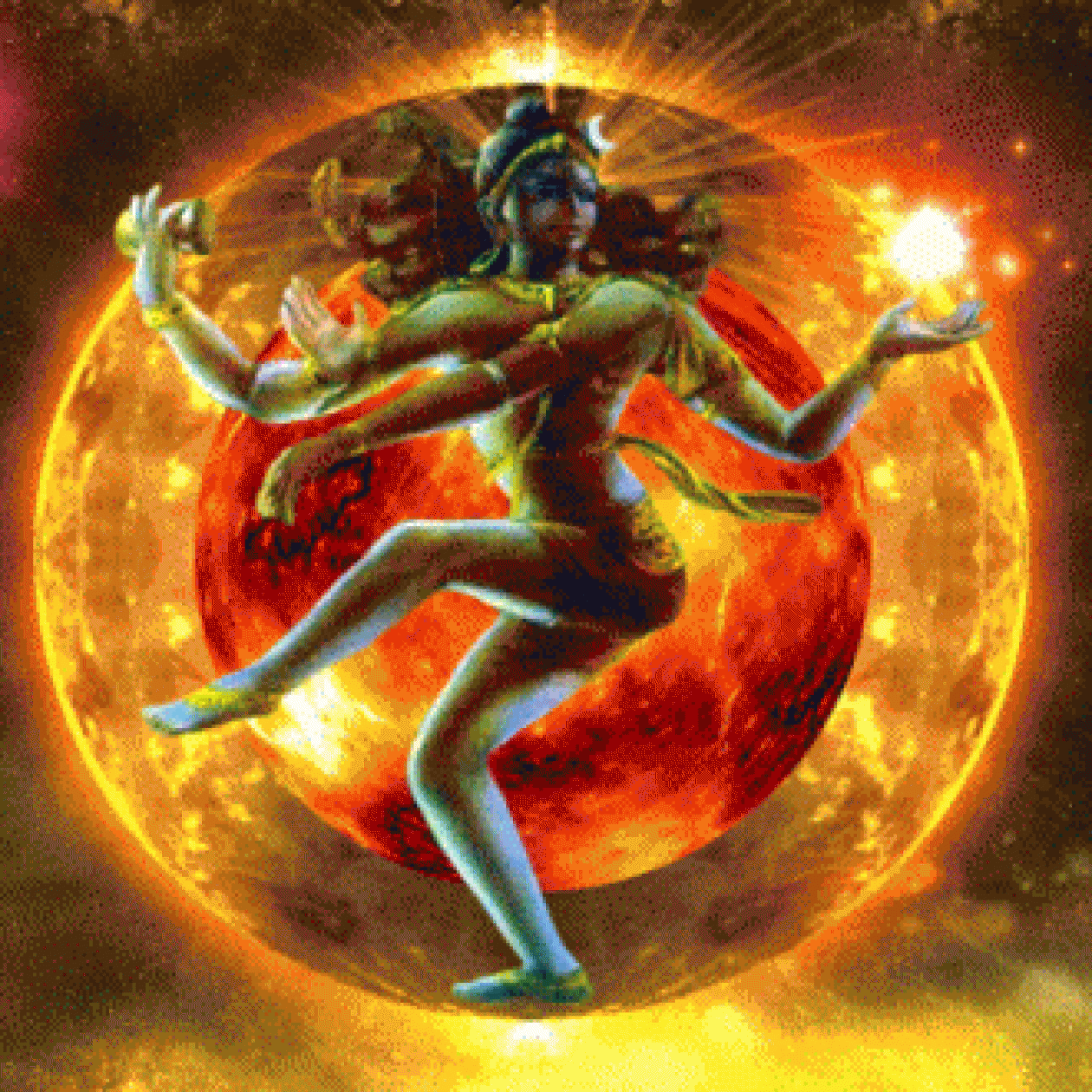
Tolerance in Hinduism
Tolerance in Hinduism
According to Paul William Roberts, “Conversion has largely failed in India because Christianity offers nothing that is not already available somewhere in the many forms of Hinduism. Hinduism never rejected the teachings of Jesus. Those who have converted either agreed with a gun pressed at their skulls as in Goa, or because it provided an escape from caste tyranny, as well as a guaranteed professional advancement. Through its Vedic legacy, Hinduism respects all faiths. It clearly states that God is one, but has many forms. The Christian message must sound preposterous: that God is indeed one, but has only one recognized form, his son. The “savages” of India were sophisticated – so sophisticated that the imperialist mixture of church and state in Europe could not grasp such sophistication.

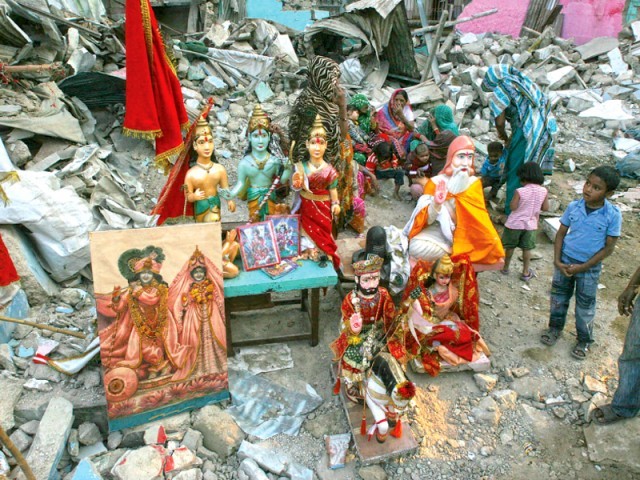
The sheer power of Hinduism terrified the Christian soldiers. The British were more cunning at the game than the Portuguese, careful to show respect for Indian religions. Yet they sneered at the pagans behind their back, educated the Indian elite in British-run schools, or at Eton and Cambridge – which, if it did not guarantee conversion to Christianity, resulted in lapsed Hinduism, agnosticism, or an intellectual humanism.
In India, Anglo indoctrination produced a generation of “brown sahibs” who looked down on the religion of the masses, the opium of the people. Such is the power of colonization that a whole generation must pass before the paralyzing spell wears off. “ (source: Empire of the Soul: some journeys in India – By Paul William Roberts p. 323-325)
To quote Sir Sarvepalli Radhakrishnan, ” The intolerance of narrow monotheism is written in letters of blood across the history of man from the time when first the tribes of Israel burst into the land of Canaan. The worshippers of the one jealous God are egged on to aggressive wars against people of alien cults. They invoke divine sanction for the cruelties inflicted on the conquered. The spirit of old Israel is inherited by Christianity and Islam, and it might not be unreasonable to suggest that it would have been better for Western civilization if Greece had molded it on this question rather than Palestine. Wars of religion which are the outcome of fanaticism that prompts and justifies the extermination of aliens of different creeds were practically unknown in Hindu India.”
(source: The Hindu View of Life – By Sir. Sarvepalli Radhakrishnan. p. 39-41) Material in this book was originally delivered in the form of lectures, the Upton Lectures, in 1926, at Manchester College, Oxford.)
From the earliest date the Christian church had taught that all the pagan religions were invented by the devil. The whole early medieval psychology of sin was bounded with this. St. Augustine had sanctioned the idea that the demons persuaded the ancients to false belief. Some of the most virulent attacks on pagan gods are to be found in St. Augustine’s De Civitata Dei. This goes a long way in explaining the deliberate Christian attempts to portray the Hindu gods as demonic and the intolerance of the Christian missionaries.
The Vedas say that ” the wise call the One by many names”, and exhort us to “let good thoughts come to us from everywhere”; in the Bhagavad Gita, Lord Krishna assures the adherents of all religions that “those who pray with devotion to another god, it is to Me that they pray.”
From the earliest date the Christian church had taught that all the pagan religions were invented by the devil. The whole early medieval psychology of sin was bounded with this. St. Augustine had sanctioned the idea that the demons persuaded the ancients to false belief. Some of the most virulent attacks on pagan gods are to be found in St. Augustine’s De Civitata Dei. This goes a long way in explaining the deliberate Christian attempts to portray the Hindu gods as demonic and the intolerance of the Christian missionaries.
The Vedas say that ” the wise call the One by many names”, and exhort us to “let good thoughts come to us from everywhere”; in the Bhagavad Gita, Lord Krishna assures the adherents of all religions that “those who pray with devotion to another god, it is to Me that they pray.”
Many foreign groups of people persecuted for their religion came to seek refuge in India. The Parsis (Zoroastrianism) have thrived. The heterodox Syrian Christians have lived in peace until the Portuguese came to enlist them in their effort to christianize India. The Jews have expressed their gratitude when they left for Israel because India was the only country where their memories were not of persecution but of friendly co-existence. All these groups were not merely tolerated, but received land and material support for building places of worship. Yuan Chwang, Chinese traveler, reports that at the great festival of Prayaga, King Harsha dedicated on the first day a statue to the Buddha, another to the sun, the favorite deity of his father, on the second, and to Shiva on the third. The famous Kottayam plates of Sthanuravi (ninth century AD) and the Cochin plates of Vijayaragadeva bear eloquent testimony to the fact that the Hindu kings not only tolerated Christianity but granted special concessions to the professors of that faith. Today, The Tibetan Buddhist and their spiritual head, the Dalai Lama have taken refuge in India, from the persecution of Communist China.
Hinduism is fabulously famous for its tolerance for all religions. What it cannot tolerate is any religion that declares it has a unique monopoly over God. Hinduism classic contention as stated at the outset in the Rig Veda: “Truth is one; sages call it by different names.” or “Ekam sath, Vipraah bahudhaa vadanti”
“How artistic, that there should be room for such variety – how rich the texture is, and how much more interesting than if the Almighty had decreed one antiseptically safe, exclusive, orthodox way. Although he is Unity, God finds, it seems, his recreation in variety!” But beyond these differences, the same goal beckons.”
(Source: Prema Chaitanya, praises Hinduism’s classic contention The World’s Religions – By Huston Smith p 73 & 81). http://www.hinduwisdom.info/
One comment on “Tolerance in Hinduism”
Leave a comment


HINDUISM
SANSKRIT
- Ashtaadhyaayi part 2
- Ashtaadhyaayi Part 3 in Hindi
- Brihad Dhatu Rupavali
- Download Bhrigu Sutras.pdf
- DOWNLOAD SANSKRIT FREE
- First book of Sanskrit-elementary
- First book of Sanskrit-elementary
- Higher sanskrit grammer
- kashika Nyasa Padamanjari—Sutrapatha Dhatupatha Ganapatha
- Panin Ashtaadhyaayi SootrapaathahYatibodhasahitah
- Panini Ashtadhyayi/mahabhasya – Sanskrit part 2
- Panini astadhyayi part 2
- Panini Mahabhashya
- Samskrita Vakya Prabodh – Swami Dayanand
- Samskrita Vakya Prabodh- Swami Dayanand Saraswati
- sanskrit daily conversation
- Sanskrit dictionary in 3 vol
- Sanskrit elementary -second book.
SANSKRIT LEARNING FREE
- Speak Sanskrit easy way- audio download
- Vachaspatya sanskrit
- Vedic Introduction


Spirituality and meditation


 SANATAN DHARMA
- Vishpala- Ancient medical procedure in India
- Lost Horizon, about the Lost Kingdom of Shangri-La’ पृथ्वी का अद्भूत और दिव्य स्थान-#शंगरीला_घाटी
- Why baby live in womb for 9 months and 9 days
- Ram Setu- a marvel of ancient engineering
- Science in Hinduism
- मुरुदेश्वर, कर्नाटक, Murudeswar, Karnatka, India- Highest Shiva in world
- MUSICAL STEPS IN AIRAVATESHWARA MANDIR; AN EXTRAORDINARY EXAMPLE OF SHILPA SHASTRA
- Untitled
- Sun temple of Multan
- Varahamihir, who predicted water in Mars
Ancient Indian Temples
- शिव का अदृश्यलोक: साल में तीन महीने के लिए प्रकट होने वाला एक मंदिर | KU...
- Surya Temple - Kalkere, Haveri, Karnataka, India- Beutiful sculpture in small villege
- God Ram had advanced Bow and missile as arrow-decoded-
- Sri Lakshmi Narasimha Temple, Javagal – A Forgotten Wonder
- Why baby live in womb for 9 months and 9 days
- बृहदेश्वर मंदिर, Brihdeswar Temple in Thanjavur,Tamilnadu
- Baphuon Temple -Splendid Shiva Temple in Cambodia, earlier Hindu Kingdom
- Death of Hindu
- Untitled
- Sphinx temple of Baluchistan
Donations
If you like, donation button is here.
$5.00
Vedic science
- Vishpala- Ancient medical procedure in India
- Lost Horizon, about the Lost Kingdom of Shangri-La’ पृथ्वी का अद्भूत और दिव्य स्थान-#शंगरीला_घाटी
- Why baby live in womb for 9 months and 9 days
- Ram Setu- a marvel of ancient engineering
- Science in Hinduism
- मुरुदेश्वर, कर्नाटक, Murudeswar, Karnatka, India- Highest Shiva in world
- MUSICAL STEPS IN AIRAVATESHWARA MANDIR; AN EXTRAORDINARY EXAMPLE OF SHILPA SHASTRA
- Untitled
- Sun temple of Multan
- Varahamihir, who predicted water in Mars
Top Posts & Pages





 HINDUISM AND SANATAN DHARMA
Pingback: Santana Dharma – My Human Experience! | Vidya's Journal