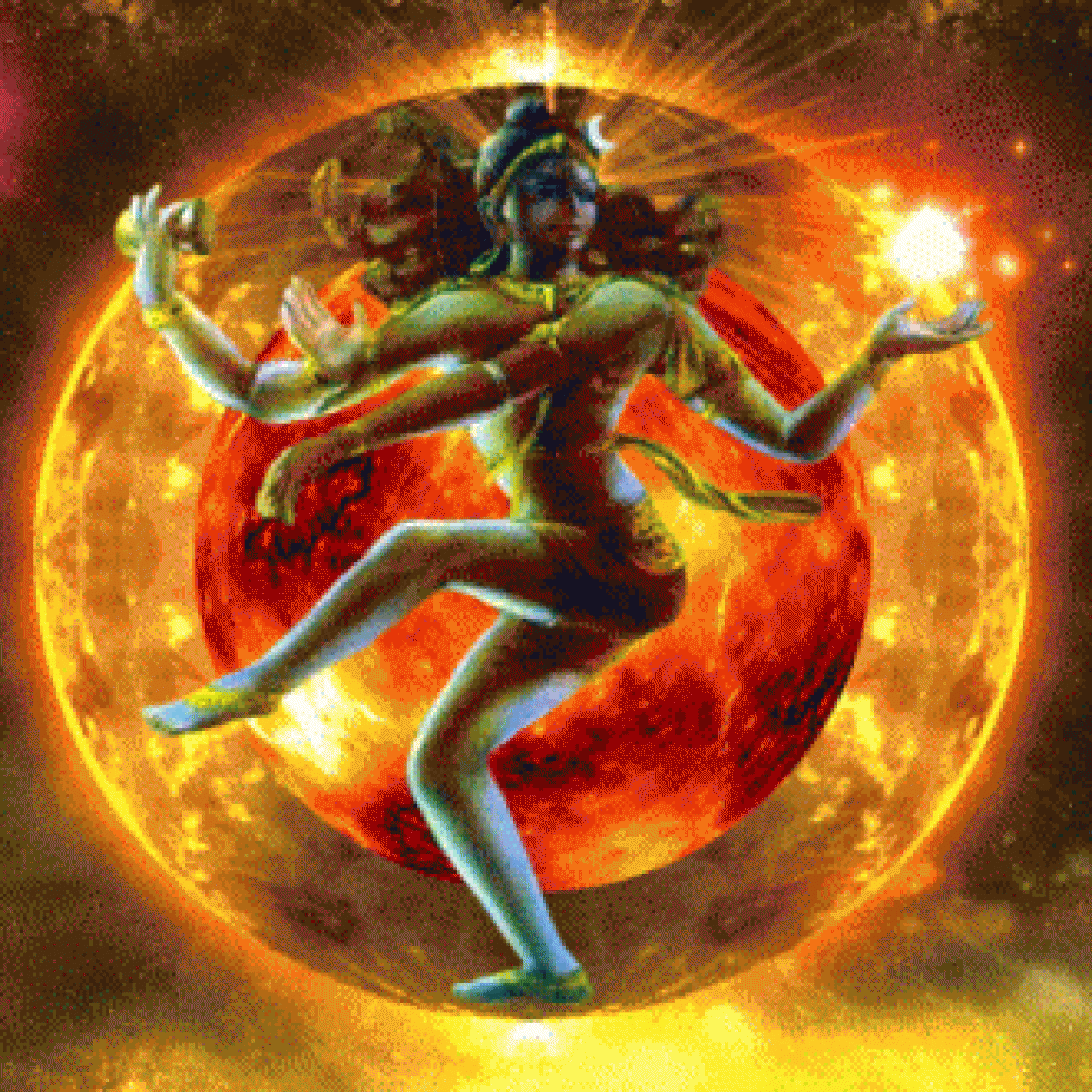
Shri Parvati Mangal Paath -By Tulsidas
Pārvatī Maṅgala
INTRODUCTION
A brief outline of the story of Lord Shiva’ marriage with Parvati
Once upon a time, Lord Shiva, the Lord of the entire creation (‘Akhileshwar’) went to
sage Kumbhaj; he was accompanied by his wife, Bhavani, the Mother Goddess, who was
also known as Sati, the pure one. The sage narrated Lord Ram’s divine story as he
usually used to do at his hermitage. This filled Shiva with immense joy and made him
feel ecstatic. On the request of the sage, Lord Shiva described Lord Ram’s ‘Bhakti’
(devotion) for the sage.
After staying for a long time at the sage’s hermitage and enjoying the nectar of
Lord Ram’s devotion as it poured out of constant discourses and discussions, Lord Shiva
finally started on his way back to his own abode.
Meanwhile, Lord Vishnu had incarnated as Lord Ram with a divine mandate to
eliminate the cruel demons from earth, and at the time Shiva was on his way to his abode,
Lord Ram was wandering in the Dandak forest searching for his abducted wife Sita who
had earlier been taken away by the demon king Ravana.
When Shiva saw his revered Lord Ram in the forest as he was passing overhead
in the sky, he (Shiva) saw it as a rare opportunity to have a close-up vision of the Lord
while he was alone in the forest in the guise of a hermit. Shiva could not resist the urge to smile and bow before his beloved Lord, Sri Ram, before moving ahead.
But his wife Sati could not fathom the mystery of her enlightened husband, Shiva,
bowing with great respect and getting his eyes filled with tears of love and affection for a
prince grieving and searching for his lost wife. Though Shiva told her who this prince
actually was, and that his search for Sita was a well-thought-out plan so that the
demons are not warned that Lord Vishnu has arrived to kill them and that Sita was no one
else but Laxmi, Vishnu’s eternal divine consort—because if the demons came to know
the secret they would either escape or surrender before the Lord, and the Lord being
merciful would be morally bound to forgive them. The whole purpose of Lord Vishnu’s
incarnation as Ram would be nullified in this case.
But Sati was so overcome with delusions that she would not listen. Such is the
power of being stubborn and not paying heed to the advice of the wise ones. She doubted Shiva’s version and wisdom, wandering how it is ever possible for the Supreme Being to
behave the way Ram was behaving. Wouldn’t it be expected from the Supreme Being,
whom her husband Shiva claims Ram to be, to know who had abducted his wife Sita, and
to make matter worse he is not expected to wail and lament like an ordinary helpless man
the way Ram was doing.
So she wanted to test the veracity of Shiva’s statement. Shiva decided that this
doubt in her mind is like cancer and it would be ruinous for her spiritual well-being, and
therefore it is better to nip the bud at the earliest. So he gave her permission, but with a
caveat to be careful and remain within limits of righteousness.
Sati’s intellect and wisdom had been eclipsed by Maya (delusions), so she could
not think properly. She disguised herself as Sita and stood on the way in the direction
Lord Ram was moving ahead in the forest, in the hope that the Lord would not recognize
her and think that he has found Sita. This would prove to her that Ram did not know
anything, and he was like an ordinary man.
When Lord Ram saw her on the path, the Lord paid his respects to her and asked
politely where her husband Lord Shiva was, and what was she doing alone in this dense
forest. She should better go back to her husband and say his respects to him. Sati was
stunned and completely taken aback.
Sati regretted her misdemeanors and her foolishness. She came back to where
Shiva was meditating under a tree while she was gone. Shiva knew everything that was
enacted by Sati, and he was very peeved that she had taken the form of Sita, the revered
wife of Lord Ram whom Lord Shiva worships as his God. For Shiva, Sita was like his
mother, and to imagine that his wife would assume the form of his mother was too much
for Shiva to digest. He decided that now onwards he will have nothing to do with Sati in
this body—because she had assumed the form of Sita.
So Lord Shiva went quietly back to his abode at Mt. Kailash, without talking to
Sati any further, and immersed himself in deep meditation on Lord Ram. Eighty-seven
Samvats (centuries) passed. When Shiva woke up from his meditative trance, Sati came
to offer her respects to him, but Shiva gave her a seat in the front of him instead of by his
side as he usually used to do on earlier occasions. Shiva had mentally abandoned Sati, but
since she was immaculate otherwise he did not physically left her.
This seating alarmed Sati, and inspite of her repeated requests Shiva did not
divulge the reason. Sati was very sad, and she knew that without Shiva’s love, her life was
meaningless Meanwhile, her father, Dakshaprajapti, held a fire sacrifice, and he invited all the
Gods to attend it, except Shiva with whom he nurtured some ill-will. When Sati saw the
Gods going through the sky in their decorated chariots, she asked Shiva the reason. The
Lord told her everything. Sati then insisted that she be allowed to go to attend her father’s
fire sacrifice. Shiva told her that since he was not invited by Daksha, it will not be in
order for her to go there as it would invite scorn and insult. Showing her stubborn nature
for the second time, she insisted that she will go. So Shiva thought that it is the proper
time to get rid of Sati in the physical form also as she had become too arrogant and there
was no hope of ever rectifying her.
He allowed her to go. At her father’s place, things became nasty. She was neither
welcome nor would anyone show any respect to her. Like Shiva had predicted, she was
ridiculed and made into a laughing stock. The things came to a head when she discovered that during the actual rituals of the sacrifice, no offering was being made to Shiva who
was supposed to the ‘Maha-Deva’, the Great God. She found that all the other Gods, even
the most inconsequential minor ones, were proudly accepting gifts and sneering at her!
Angry and humiliated beyond measure, she jumped into the blazing fire to end her
life, declaring her eternal love for Shiva and vowing to be with him in her next life.
When Shiva came to know of the entire episode, he became angry too, and sent
his devotee Virbhadra to take revenge with Daksha. Virbhadra completely ruined the fire
sacrifice and punished all the attendants.
[This part of the story is the first phase of Parvati’s life. It is narrated in detail in
Tulsidas’ ‘Ram Charit Manas’, Baal Kand, from Chaupai line no. 1 that precedes Doha
no. 48—to Chaupai line no. 5 that precedes Doha no. 65.]
Now we come to the second phase of Parvati’s life, the phase in which she was
reunited with Shiva in a marriage ceremony that Tulsidas has elaborately described in his
classical composition PARVATI MANGAL.
At the time of burning her tainted body by jumping into the fire of the sacrifice,
Sati had asked for a boon from Lord Hari (Vishnu)—that she must have love and
devotion for the holy feet of Lord Shiva in any birth she takes. [Refer: Ram Charit
Manas, 1/65/5]
If we closely examine the developments we will see something obvious—that is,
though Sati had doubted Shiva’s wisdom and tested Ram’s integrity by assuming the
form of Sati, she had deeply regretted it (Ram Charit Manas, 1/53—1/54/1-2, 1/58/1-4).
She had realised that being exceptionally righteous, Shiva had abandoned her because she
had assumed to form of Sati whom Shiva worships as Mother Goddess. But the damage
had already been done. So one of the reasons why Sati decided to burn herself by
jumping into the fire pit was to discard this corrupted body by which she took the form of
Sita and annoyed Shiva. She rightly thought for once that if she sincerely wished to be
reunited with her beloved husband, Shiva, then it has to be with a new body.
It is now clear why she asked ‘Hari’ for the boon, instead of say Brahma, the
creator who must also have been present on the occasion, because it was Vishnu (Hari)
whom she had offended by testing him in the form of Sita.
In her new birth, Sati became a girl child in the household of Himvant, the king of
the snow-clad Himgiri, the mighty Himalayas. [It is the mountain range to the north of
India.] In this birth she was known as ‘Parvati’. Ever since she took birth there was
happiness and all round welfare in Himvant’s kingdom.
Once the celestial sage Narad arrived at the place and seeing the palm of the child
Parvati he made a prediction indicating that her husband would be none else but Shiva.
This was an incredulous proposition that made her parents very depressed as Shiva was
an ascetic and no one has access to him. But this prediction nevertheless kindled love for
the Lord in the heart of the young Parvati who determined that she will break all stereo
types and show to the world that everything is possible by firm determination. So she did
the severest form of Tapa (penance and austerity) imaginable and became deserving to
marry Shiva. Lord Brahma himself announced it and assured her that her wishes would
be fulfilled. [Refer: Ram Charit Manas, 1/74/1-8—to 1/75/5.]
Meanwhile, ever since Sati had burned herself, Shiva was unhappy. The Lord
loved Sati inspite of her mischief. So when he was in deep meditation, Lord Ram
appeared to him and requested him to forgive her as she has done severe Tapa to clean herself, and was completely devoted to him. Lord Ram finally expressly asked Shiva to
go and marry Parvati. [Refer: Ram Charit Manas, 1/76, and 1/76/5-8.]
Shiva replied that though this would not what he would like to do if allowed to
choose, but since it is the wish of his beloved Lord Ram he has nothing to say and would
do whatever the Lord asks him and whatever pleases the Lord. Lord Ram told Shiva that
he has kept his promise of leaving Sati because she had assumed the form of Sita, but
now he must respect what Ram advises him. [Refer: Ram Charit Manas, 1/77/1-7.]
Shiva wanted to test Parvati’s love and devotion for him, so he sent the seven
celestial sages known as ‘Sapta-rishis’ to go and find out the depth of Parvati’s
commitment to him. The sages went and tried every trick they could think of to dissuade
Parvati from marrying Shiva, but faced only rebuttal from her. Finally they blessed her
and paid their obeisance to before reporting back to Shiva about her sincerity and
honesty. Shiva was very pleased, but being a veteran ascetic, he once again immersed
himself in deep meditation on Lord Ram, forgetting about the immediate task at hand.
[Refer: Ram Charit Manas, 1/77—to 1/82/1-4.]
In the meantime, a cruel demon named Tarakaasur began wreaking havoc on the
world, and the creator Brahma determined that he can be only be killed by the son of
Shiva. But the problem was that Shiva was lost in meditation, and unless he marries there
was no chance of him begetting a son. So the Gods collected in a great huddle and asked
Kamdeo, the god of passion and lust, to sacrifice himself for the larger good of the rest of
them. This was kind of igniting passions in Shiva’ heart so that he would have a desire to
marry. Kamdeo knew that he was playing with fire, because to disturb Shiva in his
meditation would certainly invite his sternest of wraths. And this is exactly what
happened. When Kamdeo shot an arrow of flowers at Shiva, the Lord woke up and glared
at him with fire blazing from the third eye in his forehead. Kamdeo was immediately
reduced to ashes. [Refer: Ram Charit Manas, 1/83/8—to 1/87/1-6.]
Kamdeo wife Rati asked for forgiveness from Shiva, insisting that her husband
had not done anything for some personal mischief but to serve the interests of the Gods
who had asked him to go and disturb the Lord so that he can be married. So, Shiva
blessed her that she would be reunited with her husband when Lord Vishnu incarnates on
earth as Lord Krishna. [Refer: Ram Charit Manas, 1/87/7-8—to 1/88/1-3.] All the gods assembled and requested Shiva to marry Parvati who had already
successfully done severe Tapa to marry him and had been granted such boon by the
creator Brahma.
So the process of the marriage between Lord Shiva and Parvati was set rolling.
Both the bride’s side (Himvant) and the groom’s side (the Gods) made elaborate
preparations, and the marriage was formalized with great fanfare and ceremony like the
way Lord Ram was married to Sita.
Tulsidas’ book ‘Parvati Mangal’ skips all the background developments that led
to this marriage and focus its attention on singing about the events that were directly
associated with the marriage itself. This part of the episode has been briefly dealt with in
Ram Charit Manas, and it is certainly not as detailed as in Parvati Mangal. Perhaps
Tulsidas wrote ‘Parvati Mangal’ to fill this gap—to describe in detail the divine marriage
which he could not do in Ram Charit Manas because of some constraints. [Refer: Ram
Charit Manas, 1/88/4-8—to 1/103/1-4.]
बिनइ गुरहि गुनिगनहि गिरिहि गननाथहि ।
हृदयँ आनि सिय राम धरे धनु भाथहि ॥ १ ॥
गावउँ गौरि गिरीस बिबाह सुहावन ।
पाप नसावन पावन मुनि मन भावन ॥ २ ॥
‘गुरु’ की, ‘गुणी लोगों’ (विज्ञजनों) – की, ‘पर्वतराज’ (हिमालय) – की और ‘गणेशजी’ की वन्दना करके फिर ‘जानकीजी’ और भाथेसहित धनुष धारण करने वाले ‘श्रीरामचन्द्रजी’ को स्मरण-कर ‘श्रीपार्वती’ और ‘कैलासपति महादेवजी’ के मनोहर, पापनाशक, अन्तः करण को पवित्र करने वाले और मुनियों के भी मन को रुचिकर लगने वाले विवाह का गान करता हूँ ॥ १-२ ॥
1-2. At first I (Tulsidas) pray and pay my obeisance to my Guru (moral preceptor;
teacher), to the wise ones, to the patron goddess of speech (i.e. goddess Saraswati) and
Lord Ganesh (who is the Lord of Shiva’s followers and the deity who ensures success in
all enterprises).
Having done so, I most reverentially remember and invoke in my heart Lord SitaRam who has a bow and arrow in his hands, and a quiver tied around his waist1
.
After paying due respect to these revered deities I shall now begin the narration of
the auspicious marriage of Gauri (Parvati) and Lord Shiva (Girish)2
. Singing, hearing and
narrating this auspicious event vanquishes all sins. It is very purifying for the mind and
the heart, and is adored by great sages and saints who love to sing it and hear about it. (1-
2)
[Note—1
It must be noted that Tulsidas was a devotee of Lord Ram first and foremost. So
he invoked the Lord and enshrined him in his heart before proceeding further. In fact, he
decided to sing about the marriage of Lord Shiva and Parvati because even Lord Ram had
said that if one wants to please him then he must first please Lord Shiva. Having written
‘Janki Mangal’ which describes the marriage of Lord Ram and Sita, Tulsidas thought it
prudent to apply his narrative and poetic skills to describe the holy marriage of Lord
Shiva and Parvati as an indirect means to please his Lord, Sri Ram.
In Ram Charit Manas, Sundar Kand, Chaupai line nos. 1-2 that precedes Doha
no. 47, Tulsidas says—“Only till the time Lord Ram, who holds a bow and an arrow in
his hands and has a quiver tied to his waist, is not enshrined in one’s heart do all the
negative qualities and mischief mongers such as Lobha (greed), Moha (delusions, attachments), Matsarya (jealousy, ill-will, malice), Mada (arrogance, hauthtiness, false
sense of self-importance etc.) are able to live there.”
In other words, if one wishes to start on an auspicious work such as singing the
marriage of Lord Shiva and Parvati it is absolutely essential to clean one’s inner self, and
there is no other method better to do so than to invoke and enshrine Lord Ram in one’s
heart.
The first verse of Janki Mangal is like this present verse of Parvati Mangal
since the same set of deities is paid respect to in both the books.
2
Parvati is called ‘Gauri’ because she was of a fair complexion. Lord Shiva is
called ‘Girish’ because he is the Lord of the mighty mountains, the Himalayas, where his
abode known as Mt. Kailash is situated.]
कबित रीति नहिं जानउँ कबि न कहावउँ ।
संकर चरित सुसरित मनहि अन्हवावउँ ॥ ३ ॥
पर अपबाद-बिबाद-बिदूषित बानिहि ।
पावन करीं सो गाइ भवेस भवानिहि ॥ ४ ॥
मैं काव्य की रीति (शैलियों) को नहीं जानता और न कवि ही कहलाता हूँ, मैं तो केवल शिवजी के चरित्र-रूपी श्रेष्ठ नदी में मन को स्नान कराता हूँ ॥ ३ ॥
और उसी श्रीशंकर एवं पार्वती-चरित्र का गान करके दूसरों की निन्दा और वाद-विवाद से मलिन हुई वाणी को पवित्र करता हूँ ॥ ४ ॥
3-4. I do not know the different styles, patterns, rules, manners and customs practiced
while writing poetry, nor am I known (famed or renowned) as a poet. I do not harbour
any desire to be praised as a poet. I simply intend to bathe my mind and heart in the
auspicious and pleasant river represented by the divine stories of Lord Shiva. (3)
By dipping in this holy river (i.e. by singing about the marriage of Lord Shiva
with Parvati), I wish to clean and purify my speech which has been tarnished, corrupted
and darkened over time by criticizing others as well as by indulging in endless and
useless debates, arguments and fruitless chatter about worldly matters. (4)
[Note—The same idea is expressed in Ram Charit Manas where Tulsidas says that he is
not writing the divine story of Lord Ram to show that he is any great schlolar or poet but
to purify his speech and give peace to his mind, heart and soul. He says that since he is
not an expert at anything, he is scared stiff to attempt to do such a gigantic task, but since
it is the divine story of Lord Ram he begs all those who read it to forgive him for the
shortcomings, and intead enjoy the nectar that the story contains. Refer: Ram Charit
Manas, Baal Kand, from Chaupai line no. 4 that precedes Doha no. 8—to Doha no. 9.
Regarding the speech become corrupted and polluted by constant criticism of others
or indulging in futile talk about worldly matters, Tulsidas’ book Vinai Patrika has many
references to it. For instance, verse no. 82, stanza no. 3; verse no. 237, stanza no. 1; and
verse no. 252, stanza no. 2, line no. 2.]
जय संबत फागुन सुदि पाँचैं गुरु छिनु ।
अस्विनि बिरचेउँ मंगल सुनि सुख छिनु छिनु ॥ ५ ॥
जय नामक संवत् के फाल्गुन मास की शुक्ला पञ्चमी बृहस्पतिवार (गुरुवार) को अश्विनी नक्षत्र में मैंने इस मङ्गल (विवाह-प्रसंग)- की रचना की है, जिसे सुनकर क्षण-क्षण में सुख प्राप्त होता है ॥ ५ ॥
[In this verse, Tulsidas specifies the exact date when he penned this book narrating the
divine marriage of Lord Shiva, the third of the Trinity Gods, with Parvati, the Mother
Goddess.]
I have penned this auspicious book in the Samvat (Hindi calendar year) called
Jai1
, on the 5th day of the bright lunar fortnight of the month of Phalgun (approximately
March), which fell on a Thursday, during the asterism of Ashwini Nakshatra.
This book is a provider of all auspiciousness as well as happiness and well-being
to those who recite it, hear it or read it. (5)
[Note—1
This corresponds to Vikram Samvat 1643, and to 1586 A.D.]
गुन निधानु हिमवानु धरनिधर धुर धनि ।
मैना तासु घरनि घर त्रिभुवन तियमनि ॥ ६ ॥
कह सुकृत केहि भाँति सराहिय तिन्ह कर ।
लीन्ह जाइ जग जननि जनमु जिन्ह के घर ॥ ७ ॥
मंगल खानि भवानि प्रगट जब ते भइ ।
तब ते रिधि-सिधि संपति गिरि गृह नित नइ ॥ ८ ॥
पर्वतों में शीर्ष-स्थानीय गुणों के भण्डार हिमवान् पर्वत धन्य हैं, जिनके घर में तीनों लोकों की स्त्रियों में श्रेष्ठ “मैना” नाम की पत्नी थी ॥ ६ ॥ कहो ! उनके पुण्य का किस प्रकार बखान किया जाय, जिनके घर में जगत् की माता पार्वती ने जन्म (अवतार) लिया ॥ ७ ॥ जबसे मङ्गलों की खान पार्वतीजी प्रकट हुईं तभी से हिमाचल के घर में नित्य नूतन ऋद्धि – सिद्धियाँ और सम्पत्तियाँ निवास करने लगीं ॥ ८ ॥
- Amongst the mountains, the snow-capped mountain called ‘Himwan’ (the Himalayas)
is highly regarded and is the most respected. It is said to possess the best of virtues one
can expect from a mountain.
In the household of the king of this mountain, named ‘Himwan’, was a great
queen named ‘Maina’. She was the wife of king Himwan, and was a jewel amongst
womenfolk of the entire Triloki. The word ‘Triloki’ means the three world, and it consists of the heavens, the earth, and the nether or the lower world.
[Note—The king of the snow-capped Himalayan mountain range got the name of the
kingdom he ruled, i.e. ‘Himwan’, which literally means the ‘snow mountain’. Maina was
his esteemed wife.] 7-8. Say, how can one laud the good deeds and the good luck of the king (Himwan) in [That is, when Parvati took birth in the household of Himwan, there was happiness, cheer and well-being all around; there was no dearth of anything at all.] A similar idea is expressed by Tulsidas in Ram Charit Manas, Baal Kand, from Chaupai line no. 7 that precedes Doha no. 65—to Chaupai line no. 4 that precedes Doh no. 66.
नित नव सकल कल्यान मंगल मोदमय मुनि मानहीं ।
ब्रह्यादि सुर नर नाग अति अनुराग भाग बखानहीं ॥
पितु मातु प्रिय परिवारु हरषहिं निरखि पालहिं लालहीं ।
सित पाख बाढ़ति चन्द्रिका जनु चन्दभूषन भालहीं ॥ १ ॥
कुँअरि सयानि बिलोकि मातृपितु सोचहिं ।
गिरिजा जोगु जुरिहि बरु अनुदिन लोचहिं ॥ ९ ॥
कुमारी पार्वतीजीको सयानी (वयस्क) हुई देख माता-पिता चिन्तित हो रहे हैं और नित्य-प्रति यह अभिलाषा करते हैं कि पार्वती के योग्य वर मिले ॥ ९ ॥
एक समय हिमवान भवन नारद गए ।
गिरिबरु मैना मुदित मुनिहि पूजत भए ॥ १० ॥
जाहि बोलि रिषि पगन मातु मेलत भई ।
मुनि मन कीन्ह प्रणाम बचन आसिष दई ॥ ११ ॥
कुँअरि लागि पितु काँध ठाढ़ि भइ सोहई ।
रूप न जाइ बखानि जानु जोइ जोहई ॥ १२ ॥
एक समय देवर्षि नारद जी हिमवान् के घर गये । उस समय पर्वत-श्रेष्ठ हिमवान् और मैना ने प्रसन्नता-पूर्वक उनकी पूजा की ॥ १० ॥ माता (मैना)-ने पार्वती को बुलाकर ऋषि के चरणों में डाल दिया। मुनि (नारदजी) – ने-मन-ही-मन पार्वतीजी को प्रणाम किया और वचन से आशीर्वाद दिया ॥ ११ ॥ उस समय पिता हिमवान् के कंधे से सटकर खड़ी हुई कुमारी पार्वतीजी बड़ी शोभायमान् जान पड़ती थीं । उनके स्वरूप का कोई वर्णन नहीं कर सकता। उनको जिसने देखा वही जान सकता है ॥ १२ ॥
Chanda 1. At the time Parvati took birth, the sages and seers celebrated the occasion by
organizing many religious festivities in a most cheerful manner.
The gods led by the creator Brahma, all of mankind, and the subterreanean
creatures led by the serpents also joined in the celebrations, and all of them praised
Himwan and lauded his immense good luck (that he was honoured and blessed by having
Parvati, the Mother Goddess, as his daughter, which is indeed a rarest of rare boon).
The parents (Maina and Himwan) and other family members, as well as the rest of
the kith and kin felt very exhilarated when they watched her (Parvati), and all of them
shared the joy and participated enthusiastically in taking care of and bringing up the holy
girl child.
As Parvati grew up day-by-day, she appeared to be like the wonderful moon that
adorns the forehead of Lord Shiva, who is known as ‘Chandra Bhushan1
’, during its
bright fortnight when the moon’s disc goes on increasing daily in its size, radiance and
brightness. [That is, just like the moon’s disc and its size goes on increasing every night
during the bright fortnight, the beauty and glory of Parvati went on enhancing day after
day as she grew up in the household of king Himwan.] (Chanda no. 1)
[Note—1
Lord Shiva is called ‘Chandra Bhushan’ because the crescent moon adorns his
forehead. This moon goes on increasing in its shape and radiance during the bright
fortnight.] 9-10. When the parents observed that the princess (Parvati) was grown up and has
passed the age of adolescence to become an adult, they became worried about finding a
suitable groom for her. This worry nagged them day and night. (9)
One day, the celestial sage Narad came to the house of Himwan. The best
amongst the mountains, Giribaru, and his consort Maina, cheerfully welcomed and
worshipped the sage. (10)
[Note—Refer: Ram Charit Manas, Baal Kand, Chaupai line nos. 5-8 that precede Doha
no. 66.]11-12. The mother (Maina) summoned Uma (Parvati) and put her at the feet of the
sage—i.e. she made her daughter touch the sage’s feet and pay her respects to him. The
sage, in turn, mentally bowed to her most reverentially (because he realised that she was
no ordinary girl, but the Mother Goddess who will marry the Great Lord known as
Mahadeva, i.e. Lord Shiva). Outwardly however, he wished her all the best and blessed
her for an auspicious future and all round happiness1
. (11)
At that time, Parvati was standing close by the side of her father, shoulder to
shoulder, and looked most adorable, elegant and charming. No one can describe her
beauty. Only those who had seen her can know about it. [In other words, the beauty and
majesty of Parvati were so great that words fail to do justice to them. Those who saw her
at that moment were the only fortunate ones to have witnessed the magnificence of the
sight.]2
(12)
[Note—1
Refer: Ram Charit Manas, Baal Kand, Doha no. 70.
2
Ram Charit Manas, Baal Kand, Chaupai line no. 6 that precedes Doha no. 100.]
अति सनेहँ सतिभायें पाय परि पुनि पुनि ।
कह मैना मृदु बचन सुनिअ बिनती मुनि ॥ १३ ॥
तुम त्रिभुवन तिहुँ काल बिचार बिसारद ।
पारबती अनुरूप कहिय बरु नारद ॥ १४ ॥
अत्यन्त प्रेम और सच्ची श्रद्धा से बार-बार देवर्षि के पैरों पर पड़कर मैना ने कोमल वचनों में कहा – ‘हे मुने ! हमारी विनती सुनिये ॥ १३ ॥ आप तीनों लोकों में और तीनों कालों में बड़े ही विचार-कुशल हैं, अत: हे नारदजी ! आप पार्वती के अनुरूप कोई वर बतलाइये’ ॥ १४ ॥
13-14. With immense affection and honest faith, Maina (the mother of Parvati) fell
down repeatedly at the sage’s feet, and said, ‘Oh sage! Please listen to my prayers. (13)
You are a very wise and thoughtful sage not only in all the three worlds (i.e. the
heavens, terrestrial world and the nether world) but also in all the three periods of time
(i.e. in the past, the present and the future). [That is, no one is wiser than you in this
world—no one was, no one is, and no one would ever be.] Hence, oh Narad, do tell me
about a suitable groom for Parvati.’ (14)
[Note—A variation of this request appears in Ram Charit Manas, Baal Kand, Doha no.
66 where the parents ask Narad to tell them about the good news as well as the bad news
regarding their daughter and her future. Here, they do not enquire directly about her
would-be groom.]
मुनि कह चौदह वन फिरउँ जग जहँ जहँ ।
गिरिबर सुनिय सरहना राउरि तहँ तहँ ॥ १५ ॥
भूरि भाग तुम सरिस कतहुँ कोउ नाहिन ।
कछु न अगम सब सुगम भयो बिधि दाहिन ॥ १६ ॥
देवर्षि नारद मुनि कहते हैं कि ‘ब्रह्माण्डके चौदहों भुवनों में – जहाँ-जहाँ मैं घूमता हूँ, हे गिरिश्रेष्ठ हिमवान् ! वहाँ-वहाँ तुम्हारी बड़ाई सुनी जाती है ॥ १५ ॥ तुम्हारे समान बड़भागी (बहुत भाग्य वाला) कहीं कोई नहीं है । तुम्हारे लिये कुछ भी अप्राप्य नहीं है, सब कुछ सुलभ है, क्योंकि विधाता तुम्हारे अनुकूल सिद्ध हुए हैं’ ॥ १६ ॥
15-16. Narad replied, ‘Oh king Himwan! You are the best amongst the mountain kings.
Wherever I go in the fourteen Bhuvans of the universe (i.e. all the corners of the celestial
globe) during the course of my wanderings, I have always heard your glories being sung
and you being greately praised everwhere. (15)
No one is as lucky and fortunate as you are. Nothing is inaccessible for you in this
world; everything is possible because the creator has been very favourable and benignant
towards you. (16)
[Note—Refer: Ram Charit Manas, Baal Kand, from Chaupai line no. 7 that precedes
Doha no. 65—to Chaupai line no. 4 that precedes Doha no. 66.
According to the Padma Puran, the fourteen Bhuvans are the following—(A) The
upper worlds called Urdhva Lokas are seven in number:—(i) Bhu, (ii) Bhuvha, (iii)
Swaha (iv) Maha, (v) Janaha, (vi) Tapaha, and (vii) Satyam. (B) The seven nether
worlds or lower worlds called Adhaha Loka:—(i) Atal, (ii) Vital, (iii) Sutal, (iv)
Rasaatal, (v) Talaatal, (vi) Mahaatal, and (vii) Paataal. The total number of Lokas is,
therefore, fourteen.]
दाहिन भए बिधि सुगम सब सुनि तजहु चित चिंता नई ।
बरु प्रथम बिरवा बिरचि बिरच्यो मंगला मंगलमई ॥:
बिधिलोक चरचा चलति राउरि चतुर चतुरानन कही ।
हिमवानु कन्या जोगु बरु बाउर बिबुध बंदित सही ॥ २ ॥
मोरेहूँ मन अस आव मिलिहि बरु बाउर ।
लखि नारद नारदी उमहि सुख भा उर ॥ १७ ॥
सुनि सहमे परि पाइ कहत भए दंपति ।
गिरिजहि लगे हमार जिव सुख संपति ॥ १८ ॥
” मेरे मन में भी ऐसी ही बात आती है कि पार्वती को बावला वर मिलेगा।” नारदजी के इस वचन को सुनकर उमा (पार्वती) -के हृदय में सुख हुआ ॥ १७ ॥ किंतु यह बात सुनकर दम्पति (हिमवान् और मैना) सहम गये और (नारदजी के) चरणों में पड़कर कहने लगे कि ‘पार्वतीके लिये ही हम लोगों का जीवन और सारी सुख-सम्पत्ति है’ ॥ १८ ॥
Chanda 2. Narad told Himwan, ‘The creator is definitely favourably inclined towards
you. Hence everything is possible for you, and therefore you need not worry (about the
future of your daughter.
Remember, the creator Brahma has first created a tree symbolized by the wouldbe groom before he created your daughter who is a personified form of all good virtues
and auspiciousnesss. [That is, the Creator is very deligent and careful while determining
the destiny of all those who are crearted by him. When a girl child is born, who would be
her future husband is already decided by the Creator, so there is no reason to worry.
However, since it is natural for a father to be worried about his daughter’s future, here is
something secret that I will tell you now. Listen carefully.]
Once when I was in Brahma-loka (the heavenly abode of the creator Brahma),
there was some talk about you. At that time, the four-headed Brahma had said that though
the groom who is suitable for the daughter of Himwan is crazy, he is nevertheless most
auspicious, and will be highly revered and universally worshipped even by the Gods.1
’
[This would be groom is Lord Shiva. He is regarded as ‘crazy’ because of his
unconventional lifestyle. For instance, though Shiva is married he prefers to live alone in
the mountains, submerged in deep meditation. He never wears proper clothes as he
prefers to remain naked like a hermit, never wishes to have any worldly comforts, has
serpents wrapped around his body, and in general leads a life of an hermit, unconcerned
with the world outside. Inspite of this seeming indifference, the Lord is extremely wise
and is honoured by the title of ‘Mahadeva’—the Great God. He is the most enlightened
amongst all the Gods. In fact, Lord Ram, the incarnate Supreme Being, has expressly said
that if one wishes to have devotion for him and attain him, then he must first have
devotion for Lord Shiva. Refer: Ram Charit Manas—(i) Uttar Kand, Doha no. 45; and (ii)
Lanka Kand, Chaupai line no. 6 that precedes Doha no. 2—to Chaupai line no. 3 that
precedes Doha no. 3.] (Chanda no. 2)
[Note—1
Refer: Ram Charit Manas, Baal Kand, Doha no. 67 along with Chaupai line no.
2-8 that precede it; and Doha no. 71.his allusion to a creeper vis-à-vis a woman is indicative of the dependence of the latter
on her husband. The husband is the provider of support and all necessary wherewithals
needed by a woman for her survival in this world, and this fact is also expressed in verse
nos. 29 and 23 below. The creeper can’t stand on its own; it needs the support or prop of
the tree. Similarly, in tradition-bound cultures and societies such as an Indian household,
the woman is dependent on her husband and father for all her needs.
Hence, Parvati is likened to a creeper, and her husband, Lord Shiva, to a tree.]
17-18. Narad continued—‘My heart is also inspired to think on the same line as that of
Brahma. That is, I also think that she will get a quirky, eccentric and crazy groom.’
Hearing these words of Narad, Uma (Parvati) felt very glad and happy in her heart.1
Why did she feel glad and happy. It was because it is already decided who her husband would be, and that he will not be an ordinary person but one who will be the most exalted amongst the Gods so much so that all of them would worship and revere him. Say, who will not be happy to get such a husband who will be the Lord of the world, and who will command respect even by the Gods?
But the news shocked the couple (i.e. the parents of Parvati). They were
extremely alarmed and dismayed.2
They caught hold of sage Narad’s feet and said most humbly, ‘Our existence and
all the wealth and comforts that we have are meant for Girija (our daughter Parvati). If
she is not happy, then everything is useless for us. [Sage, what do you mean by what you
have just said that her husband would be crazy and eccentric? Say, what will we do with
all the wealth we have if we have a groom who is mad, and who lives like a hermit, and
who cannot provide our beloved daughter the comforts and pleasures of life? So, please
sage, tell us a way out of this dilemma if there is any, and you being the wisest amongst
the sages, we do not think anyone else can give us a better advice than you.]’3
(18)
[Note—1
Refer: Ram Charit Manas, Baal Kand, Chaupai line no. 1 that precedes Doha no.
68.
2
Refer: Ram Charit Manas, Baal Kand, Chaupai line nos. 1, 3, 7 that precede Doha
no. 68.
3
Refer: Ram Charit Manas, Baal Kand, Chaupai line no. 8 that precedes Doha no.
68.]
नाथ कहिय सोइ जतन मिटइ जेहि दूषनु ।
दोष दलन मुनि कहेउ बाल बिधु भूषनु ॥ १९ ॥
अवसि होइ सिधि साहस फलइ सुसाधन ।
कोटि कलप तरु सरिस संभु अवराधन ॥ २० ॥
तुम्हरें आश्रम अबहिं ईसु तप साधहिं ।
कहिअ मनु लाइ जाइ अवराधहिं ॥ २१ ॥
कहि उपाय दंपतिहि मुदित मुनिबर गए ।
अति सनेहँ पितु मातु उमहि सिखवत भए ॥ २२ ॥
‘देखो, तुम्हारे आश्रम (कैलास)-में महादेवजी अभी तप-साधन कर रहे हैं, (अतः) पार्वती से कहो कि जाकर मनोयोग-पूर्वक शिवजी की आराधना करे’ ॥ २१ ॥ दम्पत्ति (हिमवान् और मैना) को यह उपाय बतलाकर मुनिश्रेठ नारदजी आनन्द-पूर्वक चले गये और माता-पिता ने अत्यन्त स्नेह से पार्वतीजी को शिक्षा दी ॥ २२ ॥
19-20. Himwan continued to plead with Narad, ‘Hence, oh Lord, tell us a way out of this
situation and unfortunate circumstance by which this fault in her (Parvati’s) destiny,
according to which she is supposed to get a mad husband, can be rectified, modified or
erased.’1
The sage advised them that ‘Bidhu Bhushan’ (literally, the one whose
ornamentation is the moon; here referring to Lord Shiva) is the only Lord who is capable
of nullifying all the faults and destroying all the evil circumstances that befalls a creature
due to his or her destiny2
. (19)
By his (Shiva’s) grace, success can certainly be found. Best of efforts and the best
of means chosen by a person to reach his goal bear fruit only if he has courage, faith,
resilence and fortitude. Shiva’s worship is equivalent to worshipping millions of Kalpa
Trees (i.e. the wishfulfilling trees of the Gods).’3
In other words, it is not a child’s play to change one’s destiny. I cannot help you if it is written in Parvati’s destiny that she will have a crazy husband. However, all hope is not lost because there is one supreme power on earth which can change one’s destiny, and it is Lord Shiva. If there is some fault in your daughter’s destiny then the only God who can rectify it is Lord Shiva. And fortunately it is destined that he is going to be her husband. So why do you fall in the trap of worries and grief. Rather, you should be happy and encourage your daughter now to take steps in the correct direction—i.e. to do Tapa or penances so that the Lord can be attained. Remember, it is not easy to access the God who is the greatest in this creation—refer Ram Charit Manas, Baal Kand, Chaupai line no. 4 that precedes Doha no. 70. Lamenting and grieving will lead you nowhere. Instead, if you want future welfare of your daughter Parvati, have courage and patience. Do something positive and constructive instead of wailing and beating your chest and head like a fool. It is Lord Shiva alone who can ensure Parvati’s happiness and well-being. The creator who has created her will also care for her destiny—refer: Ram Charit Manas, Baal Kand, Doha no. 71.
[Note—1
Refer: Ram Charit Manas, Baal Kand, Chaupai line no. 8 that precedes Doha no.
68.
2
Ram Charit Manas, Baal Kand, Chaupai line nos. 7-8 that precede Doha no. 70.
3
Refer: Ram Charit Manas, Baal Kand, Doha no. 68—to Doha no. 70.] 21-22. ‘Look, in a hermitage located in your kingdom, the ‘Ish’ (Lord Shiva) is involved
in doing severe Tapa (austerities, penances, meditation). [Himwan was the king of
mountains. The ‘hermitage’ refered to here is Mt. Kailash, the abode of Lord Shiva in the
snow-capped Himalayas.]
Hence, ask Uma (Parvati) to go there and sincerely worship him (Lord Shiva)
with due devotion so that the Lord is pleased with her.1
’ (21) Showing this way out of the dilemma and consternation faced by the couple (the
parents of Parvati), the exalted sage went away cheerfully2
.
The father and the mother then lovingly advised Uma according to the suggestion
given by the learned sage Narad (which was to go and do severe Tapa to please Lord
Shiva)3
. The parents knew that Narad does not tell a lie, and whatever the sage has said is the truth and sure to happen—refer: Ram Charit Manas, Baal Kand, Chaupai line no. 8 that precedes Doha no. 71.
[Note—1
Refer: Ram Charit Manas, Baal Kand, Chaupai line nos. 4-5 that precede Doha
no. 70.
2
Refer: Ram Charit Manas, Baal Kand, Chaupai line no. 1 that precedes Doha no. 71.
3
Ram Charit Manas, Baal Kand, Chaupai line nos. 1 that precedes Doha no. 72—to
Chaupai line no. 7 that precedes Doha no. 73.]
सजि समाज गिरिराज दीन्ह सबु गिरिजहि ।
बदति जननि जगदीस जुबति जनि सिरजहि ॥ २३ ॥
जननि जनक उपदेस महेसहि सेवहि ।
अति आदर अनुराग भगति मनु भवहि ॥ २४ ॥
पर्वतराज हिमवान् ने तपस्या की सारी सामग्री सजाकर पार्वतीजी को दे दी तथा माता मैना कहने लगी कि -‘ईश्वर स्त्रियों को न रचे (क्योंकि इन्हें सदैव पराधीन रहना पड़ता है) ॥ २३ ॥ माता-पिता ने पार्वतीजी को उपदेश दिया कि तुम शिवजी की आराधना करो और अत्यन्त आदर, प्रेम और भक्ति से मन को समर्पित कर दो ॥ २४ ॥
23-24. The king of mountains assembled all the necessary paraphernalia required to do
Tapa (severe penance and austerity done to attain a desired goal) and gave them to Girija
(Parvati). The mother lamented, saying that the creator should not make women (because
they are never independent, and that their destiny is invariably linked to her husband).
(23)
The mother and the father advised her to worship and serve Lord Mahesh (Shiva)
with great respect, affection and devotion in her heart.1
(24)
[Note—1
Refer: Ram Charit Manas, Baal Kand—(i) Chaupai line nos. 1-2 that precede
Doha no. 72; and (ii) Chaupai line no. 7 that precedes Doha no. 73—to Chaupai line no. 1
that precedes Doha no. 74.]
भेवहि भगति मन बचन करम अनन्य गति हर चरन की ।
गौरव सनेह सकोच सेवा जाइ केहि बिधि बरन की ॥
गुन रूप जोबन सींव सुंदरि निरखि छोभ न हर हिएँ ।
ते धीर अछत विकार हेतु जे रहत मनसिज बस किएँ ॥ ३ ॥
देव देखि भल समय मनोज बुलायउ ।
कहेउ करिअ सुर काजु साजु सजि आयउ ॥ २५ ॥
बामदेउ सन कामु बाम होइ बरतेउ ।
जग जय मद निदरेसि फरु पायसि फर तेउ ॥ २६ ॥
देवताओं ने अनुकूल अवसर देखकर कामदेव को बुलाया और कहा कि आप देवताओं का काम कीजिये।’ यह सुनकर कामदेव साज सजाकर आये ॥ २५ ॥ महादेवजी से कामदेव ने प्रतिकूल बर्ताव किया और जगत् को जीत लेने के अभिमान से चूर होकर शिवजी का निरादर किया – उसीका फल उसने पाया अर्थात् वह नष्ट हो गया ॥ २६ ॥
Chanda 3. [This Chanda describes the intense devotion Parvati had for Shiva, and the fact
that Lord Shiva has exemplary control over himself and his natural instincts, because he
is a renunciate and a hermit par-excellence. For him, the presence of a young lady so
close made no difference. The Lord remained lost in meditation.]
Parvati’s mind and heart were soaked with devotion for Lord Shiva. Her thoughts,
speech and actions were all directed to please the Lord, and were exclusively dedicated to
him. For her, nothing else mattered or existed except Lord Shiva1
.
Parvati was completely submitted at the divine feet of Lord Shiva, and her total
submission involved her mind and heart, speech and action. How can one describe her
eminence and glory, her love and affection for Lord Shiva, and the resultant honour,
prestige and exalted stature that she automatically acquired? Her humility, simplicity and
dedication for Lord Shiva, and the way she served the Lord had no parallel. Indeed, she
became a virtual benchmark for all things virtuous and noble. Her beauty and charm as
well as youthfulness were unmatched in the world. [That is, she was well endowed with
all these grand qualities.]
But even after seeing such a wonderful and beautiful lady serving him faithfully
and with dedication, there was no agitation in the heart of Har (Shiva). [Usually when a
man finds that a young woman is serving him so closely, passion is bound to arise in his
heart. But Lord Shiva has full control over his senses and urges, and is a renunciate
hermit. So it did not matter to him who is serving him, and whether the server is a woman
or a man. If the Lord is pleased by his devotee, it is because of the latter’s devotion and
service, and not because he is either a girl or a boy!]
Indeed, those who can exercise control or establish a tight leash on Kamdeo-cupid
symbolising natural urges such as love, passions, desires, longing, lasciviousness,
amorous tendencies, physical attractions etc. towards the other sex even while the cause
for such faults exist in the vicinity, are really deemed to be courageous, self-restrained,
patient, calm, strong-willed and brave.
[In other words, it is next to impossible to exercise self-control over one’s
passions and lust when one is in close proximity of the opposite sex. If one is able to
actually practice such restraint then he is surely praise-worthy as a man who has self
control. The term ‘being brave’ implies that passion and lust or sexual desires are such a
strong force that one who can conquer them is a true warrior. It is easy to win an
opponent in battle but it is impossible to overcome these negative urges. Parvati was serving Lord Shiva at close quarters. She was handsome, young,
pretty and attractive. The fact that her presence did not stir Lord Shiva a bit proves that he
has exemplary self-restraint.]2
(Chanda no. 3)
[Note—1
Refer: Ram Charit Manas, Baal Kand, Chaupai line no. 3 that precedes Doha no.
74.
2
Refer: Ram Charit Manas, Baal Kand, Chaupai line nos. 3-4 that precede Doha no.
82.]
25-26. The Gods saw an opportune moment and summoned Kamdeo-cupid (the patron
God of love, passions, desire and longing) and asked him to do the job of the Gods. At
their instruction (or rather, request), he made all the necessary arrangements and arrived
at the site (where Lord Shiva was meditating and was being served by Parvati).1
(25)
Kamdeo behaved mischievously with Bamdeo (Shiva)—he showed disrespect to
the latter with the arrogance of the one who has conquered the world and is proud that no
one can ever dare stand his onslaught.
Kamdeo received the fruits of his arrogance that led him to commit unpardonable
mischief. He was duly rewarded (i.e. punished) for his misdeeds and misdemeanours.2
(26)
[Note—1
What was the ‘job of the Gods’ that was to be done? This is clearly mentioned in
Ram Charit Manas, Baal Kand, from Chaupai line no. 5 that precedes Doha no. 82—to
Chaupai line no. 7 that precedes Doha no. 83. Briefly it is that a demon named
Tarakaasur was causing havoc in creation, tormenting the gods as well as all other
creatures of creation. It was destined that he could only be killed by the son of Lord
Shiva. So obviously Shiva must marry to produce a son who will eliminate this terror. If
Shiva continued to do Tapa, remain lost in meditation and contemplation, and continue to
be uninterested in having any liason with a lady, then how will it be possible for him to
have a son who will kill the cruel demon Tarkaasur?
So it became necessary to somehow persuade Shiva to have a desire to marry, and
what better opportunity can there be if it not done now when Parvati is so close to him
and serving him with an intense desire to marry the Lord. It will be like killing two birds
with a single arrow—one, it would help to serve the gods as Shiva’s son out of this
marriage would eliminate the demon, and second, it would help to fulfill what has already
been written in the destiny of Parvati—that she would have Shiva as her husband.
Therefore, the creator Brahma advised the Gods to request Kamdeo to go instigate Shiva
by inspiring his heart so that the Lord has a desire to marry the beautiful lady who serves
him as her husband. Once this desire sprouts in the heart of Lord Shiva, the rest of the
things would take care of themselves. Why so? Because Lord Shiva’s desires never go in
vain, and once he wishes to marry Parvati, then it is done. But the trouble was that Shiva was lost in meditation, and so somehow his heart was
to be tampered with so that instead of remaining submerged in spiritual pursuit and living
perpetually in a state of transcendental existence which made Shiva aloof from lowly
worldly affairs such as having a desire to marry, the Lord could be persuaded to marry
Parvati who had been serving him diligently with a vow to marry him. This can only be
achieved if Kamdeo takes up the task—because Kamdeo symbolizes the emotions that
govern passions, desires, lust and longings that are inherent and latent in all living beings.
The trick was to kindle these virtues that lay dormant in Shiva’s heart because the Lord
had conquered them as he is an ascetic par-excellence, the Lord who has full control over
his impulses and sense organs as he practices exemplary self-restraint.
It was not that Kamdeo did not know what fate holds for him if he goes and acts
smart with Shiva by disturbing him in his meditation, but since it was for the welfare for
the rest of the creation—as his action would inspire Shiva to marry and beget a son who
would kill the demon Tarkaasur—he decided to go ahead nevertheless. This is clearly mentioned in Ram Charit Manas, Baal Kand, from Doha no. 83—to Chaupai line nos. 1-2
and 4 that precedes Doha no. 84.
2
This is very interesting. Kamdeo literally means the god who controls one’s
passions, lust, longing and desires. Kamdeo lives in one’s heart in a subtle form by way
of these inherent emotions in all living beings. The ascetic is able to keep Kamdeo in
tight leash, but an ordinary man succumbs to his pressures. Kamdeo started to nag at
Shiva, pinching him here and there, disturbing his meditation and Tapa, making him
restless and generally causing him great irritation and uneasiness. A great lesson lies in
this single incident—if Kamdeo was able to sway the mighty Lord Shiva, who is the
patron God of all ascetics and the greatest ascetic and renunciate in this creation, what
chance ordinary mortals have against this him—i.e. it is extremely difficult to overcome
desires, longings, passions and lust? Hence, if one is able to successfully exercise selfcontrol over one’s sense organs then obviously he is the greatest conqueror of the world!
What was the ‘wrong doing’, and how was Kamdeo punished for it? The ‘wrong
doing’ was to disturb an ascetic in his meditation and contemplation, and attempting to
pull the soul from its state of transcendental existence to a lower level of worldly
existence marked by lust, desires, passions and longings. This wrong doing was all the
more dangerous and fatal because Kamdeo, in his haughtiness and arrogance that he will
have his way no matter how exalted his target was, had forgotten that he is now playing
fools with Lord Shiva known for his anger on the one hand, and his commitment to doing
Tapa and Yoga as well lead a life of renunciation as an ascetic. So this temerity of
Kamdeo was bound to boomerang upon him—for Lord Shiva became so annoyed and
angry that he opened his legendary ‘third eye’ which spewed fire and burnt Kamdeo in an
instant.
These developments are elaborately described in Ram Charit Manas, Baal Kand,
from Chaupai line no. 5 that precedes Doha no. 84—to Chaupai line no. 8 that precedes
Doha no. 87.]
रति पति हीन मलीन बिलोकि बिसूरति ।
नील-कण्ठ मृदु सील कृपामय मूरति ॥ २७ ॥
आसुतोष परितोष कीन्ह बर दीन्हेउ ।
सिव उदास तजि बास अनत गम कीन्हेउ ॥ २८ ॥
पतिहीना (विधवा) रति को मलिन और शोकाकुल देखकर मृदुल-स्वभाव, कृपा-मूर्ति आशुतोष भगवान् नीलकण्ठ (शिवजी) ने प्रसन्न होकर उसे यह वर दिया – और फिर शिवजी उदासीन हो, उस स्थान को छोड़ अन्यत्र चले गये॥ २७-२८ ॥
27-28. When the Lord with a blue-tinged throat (i.e. Lord Shiva) saw that Rati (the
consort of Kamdeo-cupid) was extremely sad and dismayed, grieving, mourning and
lamenting at the lose of her dear husband who had been killed by the wrath of the Lord
himself, the most merciful and compassionate Lord who is very easy to be pleased was
very much moved at her plight and felt sympathy for her (Rati). The gracious Lord
regretted the developments and empathized with her, but since nothing could be done
now, he blessed Rati and granted her a boon (that her wish to be reunited with her
husband Kamdeo would be fulfilled in the next life when he would be born as the son of
Lord Krishna).1
Lord Shiva was so sorry for what had happened that he left the place to forget
about it and went somewhere else. (27-28)
[Note—1
When Shiva burnt Kamdeo, the latter’s wife Rati came grieving, and fell at the
feet of the Lord, asking for forgiveness and his blessings so that she could find her lost
husband once again. She said that it is impossible for her to live without him. Shiva is
most forgiving, kind, compassionate and loving. So though he had burnt Kamdeo for
disturbing him in his meditation, when he saw Rati mourning, grieving and lamenting he
felt very sad himself—because she was not at fault at all, and therefore should not be
punished. Since it was not possible to revive Kamdeo at that instant because he was
reduced to ashes, the only way out of the dilemma was to reunite the couple later on
during Lord Vishnu’s advent on earth as Lord Krishna. So, Lord Shiva blessed her that
she would be reunited with her husband during the incarnation of Lord Krishna. Satisfied,
Rati went her way.
These developments are narrated in Ram Charit Manas, Baal Kand, from Chanda that
precedes Doha no. 87—to Chaupai line no. 3 that precedes Doha no. 88.
Even the Gods praised Lord Shiva for this gracious and kind act of his. They said—
“Oh the merciful Lord. You have done the right thing by blessing Rati after having
punished Kamdeo by burning him. It is your natural kindness that you first punish a
creature for his misdeeds, but then immediately compensate him and grant him pardon.
Refer: Ram Charit Manas, Baal Kand, Chaupai line nos. 2-3 that precede Doha no. 89.]
दोहा-
अब ते रति तव नाथ कर होइहि नाम अनंगु ।
बिनु बपु ब्यापिहि सबहि पुनि सुनु निज मिलन प्रसंगु ॥
जब जदुबंस कृष्न अवतारा । होइहि हरन महा महि भारा ।
कृष्न तनय होइहि पति तोरा । बच अन्यथा होइ न मोरा ॥
उमा नेह बस बिकल देह सुधि बुधि गई ।
कलप बेलि बन बढ़त बिषम हिम जनु दई ॥ २९ ॥
समाचार सब सखिन्ह जाइ घर घर कहे ।
सुनत मातु पितु परिजन दारुन दुख दहे ॥ ३० ॥
पार्वतीजी प्रेम-वश व्याकुल हो गयीं, उनके शरीर की सुध-बुध (होश-हवास) जाती रही, मानो वन में बढ़ती हुई कल्प-लता को विषम पाले (सर्दी) ने मार दिया हो ॥ २९ ॥ फिर सखियों ने घर-घर जाकर सारे समाचार सुनाये और इस समाचार को सुनकर माता-पिता एवं घर के लोग दारुण (अत्यधिक) दुःख में जलने लगे ॥ ३० ॥
29-30. When Uma (Parvati) saw the developments, she became very confounded and
stunned with frustration so much so that she could not think what to do next, and was so
stupefied that she became unaware of her surroundings and unconscious of her body as if
a growing and thriving Kalpa-creeper has been struck by a terrible and killing frost.
[When Parvati saw that Shiva had burnt Kamdeo who represented the desire in
the heart to have love and passion for a woman that would have inspired Shiva to think of
marrying her, and the fact that he had left the place and gone to an undisclosed location
because he wished to put everything behind him and move on, she was naturally
confounded and perplexed. She did not know what to do next. All her efforts and hopes
crumbled like a pack of cards. She was also alarmed at Lord Shiva’s anger when she saw
the way he opened his third eye to burn Kamdeo. Here, she is likened to the creeper
which is destroyed when severe cold sets in the forest.]1
(29)
Her companions (who had being deputed by her father to keep watch on her while
she was doing severe Tapa by way of serving Lord Shiva) went back to their respective
households and spread the news. When her father, mother and kith and kin learnt about
the developments, they were extremely sad and remorseful because they were now very worried about the future of Parvati. They were literally being roasted in the fire of
worries and concerns for Parvati’s well-being and future.2
(30)
जाइ देखि अति प्रेम उमहि उर लावहिं ।
बिलपहिं बाम बिधातहि दोष लगावहिं ॥ ३१ ॥
जौ न होहिं मंगल मग सुर बिधि बाधक ।
तौ अभिमत फल पावहिं करि श्रमु साधक ॥ ३२ ॥
वहाँ जाकर पार्वती को देख वे अत्यन्त प्रेम से उन्हें हृदय लगाते हैं; विलाप करते हैं तथा वाम विधाता को दोष देते हैं ॥ ३१ ॥ वे कहते हैं कि यदि देवता और विधाता शुभ मार्ग में बाधक न हों तो साधक लोग परिश्रम करके मनोवाञ्छित फल पा सकते हैं ॥ ३२ ॥
31-32. They (the parents and other relatives of Parvati) went to the place where she was
staying while serving Lord Shiva and doing Tapa (penance) to please the Lord. They
were very sad about her future. When they met her, they embraced her affectionately,
grieving and lamenting at the uncertain future that stared at her face, because the
possibility of her now marrying Shiva had become remote. They accused the creator
Brahma and other Gods of acting maliciously and ruining the future of Parvati. (31)
They said that if the Creator and the Gods do not interfere and unnecessarily cause
obstacles/hindrances in the path of seekers, then the latter would be able to achieve their
desired goals very easily. (32)
साधक कलेस सुना सब गौरिहि निहोरत धाम को ।
को सुनइ काहि सोहाय घर चित चहत चन्द्र ललामको ॥
समुझाइ सबहि दृढ़ाइ मनु पितु मातु, आयतु पाइ कै ।
लागी करन पुनि अगमु तपु तुलसी कहै किमि गाइकै ॥ ४ ॥
फिरेउ मातु पितु परिजन लखि गिरिजा पन ।
जेहिं अनुरागु लागु चितु सोइ हितु आपन ॥ ३३ ॥
तजेउ भोग जिमि रोग लोग अहि गन जनु ।
मुनि मनसहु ते अगम तपहिं लायो मनु ॥ ३४ ॥
पार्वतीजी की (दृढ़) प्रतिज्ञा को देखकर माता-पिता और परिजन लौट आये। जिसमें अनुराग-पूर्वक चित्त लग जाता है, वही अपना प्रिय है ॥ ३३ ॥ उन्होंने भोग को रोग के समान और लोगों को सर्पों के झुण्ड के समान त्याग दिया तथा जो मुनियों को भी मन के द्वारा अगम्य था, ऐसे तप में मन लगा दिया ॥ ३४ ॥
सकुचहिं बसन बिभूषन परसत जो बपु ।
तेहिं सरीर हर हेतु अरंभेउ बड़ तपु ॥ ३५ ॥
पूजइ सिवहि समय तिहुँ कर निमज्जन ।
देखि प्रेमु ब्रतु नेमु सराहहिं सज्जन ॥ ३६ ॥
जिस शरीरको स्पर्श करने में वस्त्र-आभूषण भी सकुचाते थे, उसी शरीर से उन्होंने शिवजी के लिये बड़ी भारी तपस्या आरम्भ कर दी ॥ ३५ ॥ वे तीनों काल स्नान करती हैं और शिवजी की पूजा करती हैं। उनके प्रेम, व्रत और नियम को सज्जन (साधु)-लोग भी सराहते हैं ॥ ३६ ॥
नीद न भूख पियास सरिस निसि बासरु ।
नयन नीरु मुख नाम पुलक तनु हियैं हरु ॥ ३७ ॥
कंद मूल फल असन, कबहुँ जल पवनहि ।
सूखे बेलके पात खात दिन गवनहि ॥ ३८ ॥
उनके लिये रात-दिन बराबर हो गये हैं; न नींद है न भूख अथवा न प्यास ही है । नेत्रों में आँसू भरे रहते हैं, मुख से शिव-नाम उच्चारण होता रहता है, शरीर पुलकित रहता है और हृदय में शिवजी बसे रहते हैं ॥ ३७ ॥ कभी कन्द, मूल, फल का भोजन होता है, कभी जल और वायु पर ही निर्वाह होता है और कभी बेल (बिल्व) के सूखे पत्ते खाकर ही दिन बिता दिये जाते हैं ॥ ३८ ॥
नाम अपरना भयउ परन जब परिहरे ।
नवल धवल कल कीरति सकल भुवन भरे ॥ ३९ ॥
देखि सराहहिं गिरिजहि मुनिबरु मुनि बहु ।
अस तप सुना न दीख कबहुँ काहूँ कहु ॥ ४० ॥
जब पार्वतीजी ने (सूखे) पत्तों को भी त्याग दिया, तब उनका नाम ‘अपर्णा’ पड़ा । उनकी नवीन, निर्मल एवं मनोरम कीर्ति से चौदहों भुवन भर गये (उनकी कीर्ति चहुँ ओर व्याप्त हो गयी) ॥ ३९ ॥ पार्वतीजी का तप देखकर बहुत-से मुनिवर और मुनिजन उनकी सराहना करते हैं कि ऐसा तप कभी कहीं किसी ने न देखा और न तो सुना ही था ॥ ४० ॥
काहूँ न देख्यौ कहहिं यह तपु जोग फल फल चारि का ।
नहिं जानि जाइ न कहति चाहति काहि कुधर-कुमारिका ॥
बटु बेष पेखन पेम पनु ब्रत नेम ससि सेखर गए ।
मनसहिं समरपेउ आपु गिरिजहि बचन मृदु बोलत भए ॥ ५ ॥
देखि दसा करुनाकर हर दुख पायउ ।
मोर कठोर सुभाय हृदयँ अस आयउ ॥ ४१ ॥
बंस प्रसंसि मातु पितु कहि सब लायक ।
अमिय बचनु बटु बोलेउ अति सुख दायक ॥ ४२ ॥
उस समय पार्वतीजी की दशा देखकर दया-निधान शिवजी दुःखी हो गये और उनके हृदय में यह आया कि मेरा स्वभाव (बड़ा ही) कठोर है । [यही कारण है कि मेरी प्रसन्नता के लिये साधकों को इतना तप करना पड़ता है।] ॥ ४१ ॥ तब वह ब्रह्मचारी पार्वतीजी के वंश की प्रशंसा करके और उनके माता-पिता को सब प्रकार से योग्य कह अमृत के समान मीठे और सुखदायक वचन बोले ॥ ४२ ॥
देबि करौं कछु बिनती बिलगु न मानब ।
कहउँ सनेहँ सुभाय साँच जियँ जानब ॥ ४३ ॥
जननि जगत जस प्रगटेहु मातु पिता कर ।
तीय रतन तुम उपजिहु भव रतनाकर ॥ ४४ ॥
[शिवजीने कहा] – ‘हे देवि ! मैं कुछ विनती करता हूँ, बुरा न मानना । मैं स्वाभाविक स्नेह से कहता हूँ, अपने जी में (मन में) इसे सत्य जानना ॥ ४३ ॥ तुमने संसार में प्रकट होकर अपने माता-पिता का यश प्रसिद्ध कर दिया । तुम संसार-समुद्र में स्त्रियों के बीच रत्न-सदृश उत्पन्न हुई हो’ ॥ ४४ ॥
अगम न कछु जग तुम कहँ मोहि अस सूझइ ।
बिनु कामना कलेस कलेस न बूझइ ॥ ४५ ॥
जौ बर लागि करहु तप तौ लरिकाइअ ।
पारस जौ घर मिलै तौ मेरु कि जाइअ ॥ ४६ ॥
‘मुझे ऐसा जान पड़ता है कि संसार में तुम्हारे लिये कुछ भी अप्राप्य नहीं है [यह भी सच है कि] निष्काम तपस्या में क्लेश नहीं जान पड़ता ॥ ४५ ॥ [परंतु] यदि तुम वर (दुल्हा) -के लिये तप करती हो तो यह तुम्हारा लड़कपन (बचपना) है, क्योंकि यदि घर में ही पारस-मणि मिल जाय तो क्या कोई सुमेरु (पर्वत) पर जायगा ?॥ ४६ ॥
मोरें जान कलेस करिअ बिनु काजहि ।
सुधा कि रोगिहि चाहइ रतन की राजहि ॥ ४७ ॥
लखि न परेउ तप कारन बटु हियँ हारेउ ।
सुनि प्रिय बचन सखी मुख गौरि निहारेउ ॥ ४८ ॥
‘हमारी समझ से तो तुम बिना प्रयोजन ही क्लेश उठाती हो । अमृत क्या रोगी को चाहता है और रत्न क्या राजा की कामना करता है?’ ॥ ४७ ॥ इस ब्रह्मचारी को आपके तप का कोई कारण समझ में नहीं आया, यह सोचते-सोचते अपने हृदय में हार गया है, इस प्रकार उसके प्रिय वचन सुनकर पार्वती ने सखी के मुखकी ओर देखा ॥ ४८ ॥
गौरी निहारेउ सखी मुख रुख पाइ तेहिं कारन कहा ।
तपु करहिं हर हितु सुनि बिहँसि बटु कहत मुरुखाई महा ॥
जेहिं दीन्ह अस उपदेस बरेहु कलेस करि बरु बावरो ।
हित लागि कहाँ सुभायँ सो बड़ बिषम बैरी रावरो ॥ ६ ॥
कहहु काह सुनि रीझिहु बर अकुलीनहिं ।
अगुन अमान अजाति मातु पितु हीनहिं ॥ ४९ ॥
भीख मागि भव खाहिं चिता नित सोवहिं ।
नाचहिं नगन पिसाच पिसाचिनि जोवहिं ॥ ५० ॥
‘[अच्छा] यह तो बताओ कि क्या सुनकर तुम ऐसे कुल-हीन वर पर रीझ गयी (अनुरक्त हो गयी), जो गुण-रहित, प्रतिष्ठा-रहित, जाति-रहित और माता-पिता-रहित है ॥ ४९ ॥ वे शिवजी तो भीख मांगकर खाते हैं । नित्य [श्मशान में] चिता [भस्म] पर सोते हैं, नग्न होकर नाचते हैं और पिशाच पिशाचिनी इनके दर्शन किया करते हैं’ ॥ ५० ॥
भाँग धतूर अहार छार लपटावहिं ।
जोगी जटिल सरोष भोग नहिं भावहिं ॥ ५१ ॥
सुमुखि सुलोचनि हर मुख पंच तिलोचन ।
बामदेव फुर नाम काम मद मोचन ॥ ५२ ॥
‘भाँग-धतूरा ही इनका भोजन है; ये शरीर में राख लपटाये (लगाये) रहते हैं । ये योगी, जटाधारी और क्रोधी हैं; इन्हें भोग अच्छे नहीं लगते’ ॥ ५१ ॥ तुम सुन्दर मुख और सुन्दर नेत्रों-वाली हो, किंतु शिवजी के तो पाँच मुख और तीन आँखें हैं। उनका वामदेव नाम यथार्थ ही है। वे कामदेव के मद को चूर करनेवाले अर्थात् काम-विजयी हैं ॥ ५२ ॥
एकउ हरहिं न बर गुन कोटिक दूषन ।
नर कपाल गज खाल ब्याल बिष भूषन ॥ ५३ ॥
कहँ राउर गुन सील सरूप सुहावन ।
कहाँ अमंगल बेषु बिसेषु भयावन ॥ ५४ ॥
शंकर में एक भी श्रेष्ठ गुण नहीं है अपितु करोड़ों दूषण हैं । वे नर-मुण्ड और हाथी के खाल (त्वचा) को धारण करने वाले तथा साँप और विष से विभूषित हैं’ ॥५३ ॥ कहाँ तो तुम्हारा गुण, शील और शोभायमान स्वरूप और कहाँ शंकर का अमङ्गल वेष, जो अत्यन्त भयानक है ॥ ५४ ॥
जो सोचइ ससि कलहि सो सोचइ रौरेहि ।
कहा मोर मन धरि न बिरय बर बौरेहि ॥ ५५ ॥
हिए हेरि हठ तजहु हठै दुख पैहहु ।
ब्याह समय सिख मोरि समुझि पछितैहहु ॥ ५६ ॥
‘जो शंकर शशि-कला की चिन्ता में रहते हैं, वे क्या तुम्हारा ध्यान रखेंगे ? मेरे कहे हुए वचन को हृदय में धारणकर तुम बावले वर को न वरना (वरण करना)’ ॥ ५५ ॥ अपने हृदय में विचारकर हठ त्याग दो; हठ करने से तुम दुःख ही पाओगी और ब्याह (विवाह) के समय हमारी शिक्षा को याद कर-करके पछताओगी (पश्चाताप करोगी) ॥ ५६ ॥
पछिताब भूत पिसाच प्रेत जनेत ऐहैं साजि कै ।
जम धार सरिस निहारि सब नर-नारि चलिहहिं भाजि के ॥
गज अजिन दिव्य दुकूल जोरत सखी हँसि मुख मोरि कै ।
कोउ प्रगट कोउ हियँ कहिहि मिलवत अमिय माहुर घोरि कै ॥ ७ ॥
तुमहिं सहित असवार बसहँ जब होइहहिं ।
निरख नगर नर नारि बिहँसि मुख गोइहहिं ॥ ५७ ॥
बटु करि कोटि कुतरक जथा रुचि बोलइ ।
अचल सुता मनु अचल बयारि कि डोलइ ॥ ५८ ॥
‘जब तुम्हारे साथ शिवजी बैल पर सवार होंगे, तब नगर के स्त्री-पुरुष देखकर हँसते हुए अपने मुख छिपा लेंगे’ ॥ ५७ ॥ इसी प्रकार अनेकों कुतर्क करके ब्रह्मचारी इच्छानुसार बोल रहा था; परंतु पर्वत की पुत्री का मन डिगा नहीं (विचलित नहीं हुआ), भला कहीं हवा से पर्वत डोल सकता है? ॥ ५८ ॥
साँच सनेह साँच रुचि जो हठि फेरइ ।
सावन सरिस सिंधु रुख सूप सो घेरड़ ॥ ५९ ॥
मनि बिनु फनि जल हीन मीन तनु त्यागइ ।
सो कि दोष गुन गनइ जो जेहि अनुरागइ ॥ ६० ॥
जो सत्य स्नेह और सच्ची रुचि को फेरना (बदलना) चाहता है, वह [तो] मानो सावन के महीने (वर्षा ऋतु) में नदी के प्रवाह को समुद्र की ओर सूप से घुमाने की चेष्टा करता है ॥ ५९ ॥ मणि के बिना सर्प और जल के बिना मछली शरीर त्याग देती है, ऐसे ही जो जिसके साथ प्रेम करता है, वह क्या उसके दोष गुण का विचार करता है? ॥ ६० ॥
करन कटुक चटु बचन बिसिष सम हिय हए ।
अरुन नयन चढ़ि भृकुटि अधर फरकत भए ॥ ६१ ॥
बोली फिर लखि सखिहि काँपु तन थर थर ।
आलि बिदा करु बटुहि बेगि बड़ बरबर ॥ ६२ ॥
ब्रह्मचारी के कर्ण-कटु चाटु वचनों ने पार्वतीजी के हृदय में तीर-के समान आघात किया ? उनकी आँखें लाल हो गयीं भृकुटियाँ तन गयीं और होंठ फड़कने लगे ॥ ६१ ॥ उनका शरीर थर-थर काँपने लगा। फिर उन्होंने सखी की ओर देखकर कहा – ‘अरी आली ! इस ब्रह्मचारी को शीघ्र बिदा करो, यह [तो] बड़ा ही अशिष्ट है’ ॥ ६२ ॥
कहूँ तिय होहिं सयानि सुनहिं सिख राउरि ।
बौरेहि कैं अनुराग भइकें बइउँ बड़ि बाउरि ॥ ६३ ॥
दोष निधान इसानु सत्य सबु भाषेउ ।
मेटि को सकइ सो आँकु जो बिधि लिखि राखेउ ॥ ६४ ॥
[फिर ब्रह्मचारी को सम्बोधित करके कहने लगी-] ‘कहीं कोई चतुर स्त्रियाँ होंगी, वे आपकी शिक्षा सुनेंगी मैं तो बावले के प्रेम में ही अत्यन्त बावली हो गयी हूँ’ ॥ ६३ ॥ आपने जो कहा कि महादेवजी दोष-निधान हैं, सो सब सत्य ही कहा है; परंतु विधाता ने जो अंक लिख रखे हैं, उन्हें कौन मिटा सकता है? ॥ ६४ ॥
को करि बादु बिबादु बिषादु बढ़ावई ।
मीठ काहि कबि कहहिं जाहि जोइ जो भावइ ॥ ६५ ॥
भइ बड़ि बार आलि कहूँ काज सिधारहिं ।
बकि जनि उठहिं बहोरि कुजुगुति सवाँरहिं ॥ ६६ ॥
‘वाद-विवाद करके कौन दु:ख बढ़ाये ? कवि किसको मीठा कहते हैं ? जिसको जो अच्छा लगता है’। (भाव यह कि जिसको जो अच्छा लगे उसके लिये वही मीठा है।) [फिर सखी से बोली-] हे सखी ! इनसे कहो बहुत देर हो गयी है, अब अपने काम के लिये कहीं जा । देखो, किसी कु-युक्ति को रचकर फिर कुछ न बक उठें ॥ ६५-६६ ॥
जनि कहहिं कछु बिपरीत जानत प्रीति रीति न बात की ।
सिव साधु निंदकु मंद अति जोउ सुनै सोउ बड़ पातकी ॥
सुनि बचन सोधि सनेहु तुलसी साँच अबिचल पावनो ।
भए प्रगट करुनासिंधु संकरु भाल चंद सुहावनो ॥ ८ ॥
‘ये प्रीति की तो क्या, बात करने की रीति भी नहीं जानते, अतएव कोई विपरीत बात [फिर] न कहें । शिवजी और साधु की निन्दा करने वाले अत्यन्त मन्द अर्थात् नीच होते हैं, उस निन्दा को जो कोई सुनता है, वह भी बड़ा पापी होता है।’ गोस्वामी तुलसीदासजी कहते हैं कि इस वचन को सुन उनका सत्य, दृढ़ और पवित्र प्रेम जानकर करुणासिन्धु श्रीमहादेवजी प्रकट हो गये उनके ललाट में चन्द्रमा शोभायमान हो रहा था ॥ ८ ॥
सुंदर गौर सरीर भूति भलि सोहई ।
लोचन भाल बिसाल बदनु मन मोहइ ॥ ६७ ॥
सैल कुमारि निहारि मनोहर मूरति ।
सजल नयन हियँ हरषु पुलक तन पूरति ॥ ६८ ॥
उनके कमनीय गौर शरीर पर विभूति अत्यन्त शोभित हो रही थी; उनके नेत्र और ललाट विशाल थे तथा मुख मन को मोहित किये लेता था ॥ ६७ ॥ उनकी मनोहर मूर्ति को निहारकर शैल-कुमारी पार्वतीजी के नेत्रों में जल भर आया । हृदय में आनन्द छा गया और शरीर पुलकावली से व्याप्त हो गया ॥ ६८ ॥
पुनि पुनि करें प्रनामु न आवत कछु कहि ।
देखौं सपन कि सौतुख ससि सेखर सहि ॥ ६९ ॥
जैसें जनम दरिद्र महामनि पावइ ।
पेखत प्रगट प्रभाउ प्रतीति न आवइ ॥ ७० ॥
वे बारम्बार प्रणाम करने लगीं । उनसे कुछ कहते नहीं बनता था । [वे मन-ही-मन] विचारती हैं कि मैं स्वप्न देख रही हूँ या सचमुच सामने शिवजी का दर्शन कर रही हूँ ॥ ६९ ॥ जिस प्रकार जन्म का दरिद्री महामणि (पारस) को पा जाय और उसके प्रभाव को साक्षात् देखते हुए भी उसमें विश्वास न हो [उसी प्रकार यद्यपि पार्वतीजी महादेवजी को नेत्र के सामने देखती हैं तो भी उन्हें प्रतीति नहीं होती] ॥ ७० ॥
सुफल मनोरथ भयउ गौरि सोहइ सुठि ।
घर से खेलन मनहुँ अबहिं आई उठि ॥ ७१ ॥
देखि रूप अनुराग महेस भए बस ।
कहत बचन जनु सानि सनेह सुधा रस ॥ ७२ ॥
पार्वतीजी का मनोरथ सफल हो गया [इससे वे और भी] सुहावनी लगती हैं। [जान पड़ता है कि] मानो खेलने के लिये वे अभी घर से उठकर आयी हों। [उनकी देह में तप का क्लेश और कृशता आदि कुछ भी लक्षित नहीं होता] ॥ ७१ ॥ पार्वतीजी के रूप और अनुराग को देखकर महादेवजी उनके वश में हो गये और मानो प्रेमामृत में सानकर वचन बोले ॥ ७२ ॥
हमहि आजु लगि कनउड़ काहुँ न कीन्हेउ ।
पारबती तप प्रेम मोल मोहि लीन्हेउ ॥ ७३ ॥
अब जो कह सो करउँ बिलंबु न एहिं घरी ।
सुनि महेस मृदु बचन पुलकि पायन्ह परी ॥ ७४ ॥
[शिवजी कहते हैं कि ‘हमको आजतक किसी ने कृतज्ञ नहीं बनाया; परंतु हे पार्वती ! तुमने तो अपने तप और प्रेम से मुझे मोल ले लिया ॥७३ ॥ अब तुम जो कहो, मैं इसी क्षण वही करुँगा, विलम्ब नहीं होने दूँगा ।’ शिवजी के [ऐसे] कोमल वचन सुनकर पार्वतीजी पुलकित हो उनके पैरॉ पर गिर पड़ीं ॥ ७४ ॥
परि पायँ सखि मुख कहि जनायो आयु बाप अधीनता ।
परितोषि गिरिजहि चले बरनत प्रीति नीति प्रबीनता ॥
हर हृदयँ धरि घर गौरि गवनी कीन्ह बिधि मन भावनो ।
आनंदु प्रेम समाजु मंगल गान बाजु बधावनो ॥ ९ ॥
पार्वतीजी ने उनके पैरों पड़कर सखी के द्वारा अपना पिता के अधीन होना सूचित किया, तब शिवजी उनका परितोष करके उनकी प्रीति एवं नीति-निपुणता का वर्णन करते चले गये । इधर पार्वतीजी भी शिवजी को हृदय में धारणकर घर चली गयीं । विधाता ने सब कुछ उनके मन के अनुकूल कर दिया। [फिर तो] आनन्द और प्रेम का समाज जुट गया, मंगल-गान होने लगा और बधावा बजने लगा ॥ ९ ॥
सिव सुमिरे मुनि सात आइ सिर नाइन्हि ।
कीन्ह संभु सनमानु जन्म फल पाइन्हि ॥ ७६ ॥
सुमिरहिं सकृत तुम्हहि जन तेइ सुकृती बर ।
नाथ जिन्हहि सुधि करिअ तिनहिं सम तेइ हर ॥ ७६ ॥
तब शिवजी ने सप्तर्षियों (कश्यप, अत्रि, जमदग्नि, विश्वामित्र, वसिष्ठ, भरद्वाज और गौतम)- को स्मरण किया। उन्होंने आकर शिवजी को सिर नवाया। शिवजी ने उनका सम्मान किया और उन्होंने भी [शिवजीका दर्शन करके] जन्म का फल पा लिया ॥ ७५ ॥ [सप्तर्षियों ने कहा कि] ‘जो लोग एक बार भी आपका स्मरण कर लेते हैं, वे ही पुण्यात्माओं में श्रेष्ठ हैं।’ हे नाथ । हे हर ! [फिर] जिसे आप स्मरण करें, उसके समान तो वही है ॥ ७६ ॥
सुनि मुनि बिनय महेस परम सुख पायउ ।
कथा प्रसंग मुनीसन्ह सकल सुनायउ ॥ ७७ ॥
जाहु हिमाचल गेह प्रसंग चलायहु ।
जौं मन मान तुम्हार तौ लगन धरायहु ॥ ७८ ॥
मुनियों की विनय सुनकर शिवजी ने परम सुख प्राप्त किया और उन मुनीश्वरों को सब कथा का प्रसंग सुनाया ॥ ७७ ॥ [और कहा कि] ‘ तुम लोग हिमाचल के घर जाओ और इसकी चर्चा चलाकर यदि जँच जाय तो लग्न धरा आना’ ॥ ७८ ॥
अरुंधती मिलि मनहिं बात चलाइहि ।
नारि कुसल इहिं काज काजु बनि आइहि ॥ ७९ ॥
दुलहिनि उमा ईसु बरु साधक ए मुनि ।
बनिहि अवसि यहु काजु गगन भइ अस धुनि ॥ ८० ॥
[इसी अवसर] आकाशवाणी हुई कि वसिष्ठ-पत्नी अरुन्धती मैना से मिलकर बात चलायेंगी। स्त्रियाँ इस काम (बरेखी)- में कुशल होती हैं, [अतः] काम बन जायगा ॥ ७९ ॥ उमा (पार्वतीजी) दुल्हिन हैं और शिवजी (वर) दुल्हा हैं। ये मुनि लोग साधक हैं; अतः यह काम अवश्य बन जायगा ॥ ८० ॥
भयउ अकनि आनंद महेस मुनीसन्ह ।
देहिं सुलोचनि सगुन कलस लिएँ सीसन्ह ॥ ८१ ॥
सिव सो कहेउ दिन ठाउँ बहोरि मिलनु जहँ ।
चले मुदित मुनिराज गए गिरिबर पहँ ॥ ८२ ॥
शिवजी और मुनियों को आकाशवाणी सुनने से आनन्द हुआ। सुन्दर नेत्रों-वाली स्त्रियाँ सिरपर कलश लिये [शुभशकुन] सूचित करती हैं ॥ ८१ ॥ शिवजीने महर्षियों को वह दिन और स्थान बतलाया, जहाँ फिर मिलना हो सकता था; तब वे मुनिश्रेष्ठ आनन्दित होकर गिरिराज (हिमवान्) के पास चलकर पहुँचे ॥ ८२ ॥
गिरि गेह गे अति नेहँ आदर पूजि पहुँनाई करी ।
घरवात घरनि समेत कन्या आनि सब आगें धरी ॥
सुख पाइ बात चलाइ सुदिन सोधाइ गिरिहि सिखाइ कै ।
रिषि सात प्रातहिं चले प्रमुदित ललित लगन लिखाइ कै ॥ १० ॥
जब सप्तर्षि हिमवान् के घर गये, तब हिमवान् ने स्नेह एवं आदर-पूर्वक पूजनकर उनकी पहुनाई (आवभगत) की और पत्नी एवं कन्या सहित घर की सारी सामग्री लाकर उनके आगे रख दी । तब [ पूजा आदिसे] आनन्दित हो विवाह की बात चली और हिमवान् को समझाकर शुभ दिन शोधन करा प्रातःकाल ही सातों ऋषि सुन्दर लग्न लिखवाकर आनन्दपूर्वक [वहाँसे] चले ॥ १० ॥
बिप्र बृंद सनमानि पूजि कुल गुर सुर ।
परेउ निसानहिं घाउ चाउ चहुँ दिसि पुर ॥ ८३ ॥
गिरि बन सरित सिंधु सर सुनइ जो पायउ ।
सब कहँ गिरिबर नायक नेवत पठायउ ॥ ८४ ॥
हिमवान् ने ब्राह्मणों का सम्मान करके कुलगुरु और देवताओं की पूजा की । नगारों पर चोट पड़ने लगी और नगर में चारों ओर उमंग छा गयी ॥ ८३ ॥ पर्वत, वन, नदी, समुद्र और सरोवर जिन-जिनके विषय में सुना उन सभी को सभी श्रेष्ठ पर्वतों के नायक हिमाचल ने न्योता भेज दिया ॥ ८४ ॥
धरि धरि सुंदर बेष चले हरषित हिएँ ।
चवँर चीर उपहार हार मनि गन लिएँ ॥ ८५ ॥
कहेउ हरषि हिमवान बितान बनावन ।
हरषित लगीं सुआसिनि मंगल गावन ॥ ८६ ॥
वे सब -के -सब सुन्दर वेष बना-बनाकर उपहार के लिये चवँर, वस्त्र, हार और मणिगण लिये हृदय में हर्षित हो चले ॥ ८५ ॥ हिमवान् ने प्रमुदित होकर [कुशल कारीगरों को] मण्डप बनाने की आज्ञा दी और विवाहिता लड़कियाँ मङ्गल गान करने लगीं ॥ ८६ ॥
तोरन कलस चवँर धुज बिबिध बनाइन्हि ।
हाट पटोरन्हि छाय सफल तरु लाइन्हि ॥ ८७ ॥
गौरी नैहर केहि बिधि कहहु बखानिय ।
जनु रितुराज मनोज राज रजधानिय ॥ ८८ ॥
अनेक प्रकार के बंदनवार ,कलश, चंवर और ध्वजा-पताकाएँ बनायी गयीं, बाजार को रेशमी वस्त्रों से छाकर (ढककर) [बीच-बीचमें] फल-युक्त वृक्ष लगाये गये ॥ ८७ ॥ पार्वतीजी के नैहर का कहिये, किस प्रकार वर्णन किया जाय ! वह तो मानो वसन्त और कामदेव के राज्य की राजधानी ही थी ॥ ८८ ॥
जनु राजधानी मदन की बिरची चतुर बिधि और हीं ।
रचना बिचित्र बिलोकि लोचन बिथकि ठौरहिं ठौर हीं ॥
एहि भाँति ब्याह समाज सजि गिरिराजु मगु जोवन लगे ।
तुलसी लगन लै दीन्ह मुनिन्ह महेस आनँद रँग मगे ॥ ११ ॥
मानो चतुर विधाता ने कामदेव की राजधानी को और ही (अलौकिक) ढंग से रचा है । उसकी विचित्र रचना को देखकर नेत्र जहाँ जाते हैं, वहीं ठिठक-कर रह जाते हैं । इस प्रकार विवाह का साज सजाकर हिमवान् बरात का रास्ता देखने (प्रतीक्षा करने) लगे। गोस्वामी तुलसीदासजी कहते हैं कि मुनियों ने शिवजी को लग्नपत्रिका लेकर दी। इससे शिवजी आनन्दोत्सव में मग्न हो गये ॥ ११ ॥
बेगि बोलाइ बिरंचि बचाइ लगन जब ।
कहेन्हि बिआहन चलहु बुलाइ अमर सब ॥ ८९ ॥
बिधि पठए जहँ तहँ सब सिव गन धावन ।
सुनि हरषहिं सुर कहहिं निसान बजावन ॥ ९० ॥
शिवजी ने तुरंत ही ब्रह्माजी को बुलवाकर जब लग्नपत्रिका पढ़वायी, तब उन्होंने कहा कि ‘सब देवताओं को बुलवाकर विवाह के लिये चलो ।’ ब्रह्माजी ने जहाँ-तहाँ शिवजी के गण को धावन (दूत) बनाकर भेजा। यह समाचार सुनकर देवता लोग प्रसन्न हुए और नगारे बजाने को कहने लगे ॥ ८९-९० ॥
रचहिं बिमान बनाने सगुन पावहिं भले ।
निज निज साजु समाजु साजि सुरगन चले ॥ ९१ ॥
मुदित सकल सिव दूत भूत गन गाजहिं ।
सूकर महिष स्वान खर बाहन साजहिं ॥ ९२ ॥
वे सँवारकर विमानों को सजाने लगे। उस समय अच्छे-अच्छे शकुन होने लगे । इस प्रकार अपने-अपने साज-समाज को सजाकर देवता-लोग चल दिये ॥ ९१ ॥ शिवजी के समस्त दूत और भूत-गण अत्यन्त आनन्दित होकर गरज रहे हैं और सुअर, भैंसे, कुत्ते, गदहे आदि [अपने-अपने] वाहनोंको सजाते हैं ॥ ९२ ॥
नाचहिं नाना रंग तरंग बढ़ावहिं ।
अज उलूक बृक नाद गीत गन गावहिं ॥ ९३ ॥
रमानाथ सुरनाथ साथ सब सुर गन ।
आए जहँ बिधि संभु देखि हरषे मन ॥ ९४ ॥
वे अनेक प्रकार से नाचते हैं और आनन्द की उमंग को और भी बढ़ाते हैं। बकरे, उल्लू, भेड़िये शब्द कर रहे हैं और शिवजी के गण गीत गाते हैं ॥ ९३ ॥ [इसी समय] लक्ष्मीपति भगवान् विष्णु और देवराज इन्द्र समस्त देवताओं के साथ जहाँ ब्रह्माजी एवं शंकरजी थे, वहाँ आये और उन्हें देखकर अपने मन में [बहुत] प्रसन्न हुए ॥ ९४ ॥
मिले हरिहिं हरु हरषि सुभाषि सुरेसहि ।
सुर निहारि सनमानेउ मोद महेसहि ॥ ९५ ॥
बहु बिधि बाहन जान बिमान बिराजहिं ।
चली बरात निसान गहागह बाजहिं ॥ ९६ ॥
देवराज इन्द्र से मधुर वचन कहकर श्रीमहदेवजी प्रसन्न हो श्रीविष्णुभगवान् से मिले और देवताओं की ओर देखकर उन्हें सम्मानित किया । इससे शिवजी को बड़ा आनन्द हुआ ॥ ९५ ॥ [उस समय] बहुत प्रकार से वाहन, यान और विमान शोभायमान हो रहे थे। फिर बारात चली और धड़ा-धड़ नगारे बजने लगे ॥ ९६ ॥
बाजहिं निसान सुगान नभ चढ़ि बसह बिधुभूषन चले ।
बरषहिं सुमन जय जय करहिं सुर सगुन सुभ मंगल भले ॥
तुलसी बराती भूत प्रेत पिसाच पसुपति सँग लसे।
गज छाल ब्याल कपाल माल बिलोकि बर सुर हरि हँसे ॥ १२ ॥
आकाश में नगारे बजने लगे और गाने का मधुर शब्द होने लगा। शिवजी बैल पर चढ़कर चले । देवतालोग जय-जयकार करने और फूल बरसाने लगे तथा शुभ-सूचक अच्छे-अच्छे शकुन होने लगे। गोस्वामी तुलसीदासजी कहते हैं कि महादेवजी के साथ भूत, प्रेत, पिशाच-ये ही बरातियों के रूप में शोभायमान हो रहे थे। [उस समय] वर को गज-चर्म, सर्प और मुण्ड-माला से
विभूषित देखकर देवतालोग और विष्णुभगवान् हंसने लगे ॥ १२ ॥
बिबुध बोलि हरि कहेउ निकट पुर आयउ ।
आपन आपन साज सबहि बिलगायउ ॥ ९७ ॥
प्रमथनाथ के साथ प्रमथ गन राजहिं ।
बिबिध भाँति मुख बाहन बेष बिराजहिं ॥ ९८ ॥
भगवान् ने देवताओं को बुलाकर कहा कि ‘अब नगर निकट आ गया है । अतः सब लोग अपने-अपने समाज को अलग-अलग कर लो’ ॥ ९७ ॥ इस समय भूतनाथ के साथ भूत-गण शोभायमान हैं, जो अनेक प्रकार के मुख, वेष और वाहनों से विराजमान हो रहे हैं ॥ ९८ ॥
कमठ खपर मढि खाल निसान बजावहिं ।
नर कपाल जल भरि-भरि पिअहिं पिआवहिं ॥ ९९ ॥
बर अनुहरत बरात बनी हरि हँसि कहा ।
सुनि हियँ हँसत महेस केलि कौतुक महा ॥ १०० ॥
वे कछुओं के खपड़े को खाल से मँढ़कर उन्हीं को नगारों के रूप में बजाते हैं और मनुष्य की खोपड़ी में जल भर-भरकर पीते और पिलाते हैं ॥ ९९ ॥ तब भगवान् विष्णु ने हँसकर कहा कि दुल्हा के योग्य ही बरात बनी है, यह सुनकर शिवजी हृदय में हँसते हैं । इस प्रकार खूब क्रीडा कौतुक हो रहा है ॥ १०० ॥
बड़ बिनोद मग मोद न कछु कहि आवत ।
जाइ नगर नियरानि बरात बजावत ॥ १०१ ॥
पुर खरभर उर हरषेउ अचल अखंडलु ।
परब उदधि उमगेउ जनु लखि बिधु मंडलु ॥ १०२ ॥
मार्ग में बड़ा विनोद हो रहा है, उस समय का आनन्द कुछ कहने में नहीं आता। बारात बाजे बजाती हुई नगर के निकट पूहुँच गयी ॥ १०१ ॥ नगर में खलबली पड़ गयी और सम्पूर्ण हिमाचल पर्वत (राज्यभर) हृदय में आनन्दित हो गया, मानो पूर्णिमा के समय चन्द्रमण्डल को देखकर समुद्र उमड़ गया हो ॥ १०२ ॥
प्रमुदित गे अगवान बिलोकि बरातहि ।
भभरे बनइ न रहत न बनइ परातहि ॥ १०३ ॥
चले भाजि गज बाजि फिरदि नहिं फेरत ।
बालक भभरि भुलान फिरहिं घर हेरत ॥ १०४ ॥
स्वागत करने वाले प्रसन्न होकर आगे गये, परंतु बरात को देखकर घबरा गये । उस समय उनसे न तो रहते बनता था और न भागते ही ॥ १०३ ॥ हाथी, घोड़े भाग चले, वे लौटाने से भी नहीं लौटते, बालक भी घबराहट के मारे भटक गये, वे घर खोजते फिरते हैं ॥ १०४ ॥
दीन्ह जाइ जनवास सुपास किए सब ।
घर घर बालक बात कहन लागे तब ॥ १०५ ॥
प्रेत बेताल बराती भूत भयानक ।
बरद चढ़ा बर बाउर सबइ सुबानक ॥ १०६ ॥
अगवानों ने बरातियों को जनवासा दिया और सब प्रकारके सुपास (ठहरने के लिये स्थान) की व्यवस्था कर दी, तब सब बालक घर-घर पहुँचकर कहने लगे ॥ १०५ ॥ ‘प्रेत, बेताल और भयंकर भूत बराती हैं तथा बावला वर बैल पर सवार है । इस प्रकार सभी बानक दुल्हे के योग्य ही बना है (अर्थात् सारा साज-समाज ही विपरीत है) ‘॥ १०६ ॥
कुसल करइ करतार कहहिं हम साँचिअ ।
देखब कोटि बिआह जिअत जौं बाँचिअ ॥ १०७ ॥
समाचार सुनि सोयु भयउ मन मयनहिं ।
नारद के उपदेस कवन घर गे नहिं ॥ १०८ ॥
हम सत्य कहते हैं ईश्वर कुशल करें, जो जीते बच गये तो करोड़ों ब्याह देखेंगे’॥ १०७ ॥ इस समाचार को सुनकर मैना के मनमें [बड़ा] सोच हुआ। [वे कहने लगीं कि] नारद के उपदेश से कौन घर नष्ट नहीं हुआ ॥ १०८ ॥
घर घाल चालक कलह प्रिय कहियत परम परमारथी ।
तैसी बरेखी कीन्हि पुनि मुनि सात स्वारथ सारथी ॥
उर लाइ उमहि अनेक बिधि जलपति जननि दुख मानई ।
हिमवान कहेउ इसान महिमा अगम निगम न जानई ॥ १३ ॥
‘नारदजी को कहते तो परम परोपकारी हैं, परंतु ये हैं घर को नष्ट करने वाले, धूर्त और कलहप्रिय । सप्तर्षियों ने विवाह-सम्बन्धी बातचीत भी वैसी ही की, वे भी [पूरे] स्वार्थ-साधक ही निकले’ इस प्रकार माता मैना पार्वतीजी को हृदय से लगाकर अनेक प्रकार की कल्पना करने लगी और अत्यन्त दुःख मानने लगी। तब हिमवान् ने कहा कि शिवजीकी महिमा अगम्य है, उसे वेद भी नहीं जानता ॥ १३ ॥
सुनि मैना भइ सुमन सखी देखन चली ।
जहँ तहँ चरचा चलइ हाट चौहट गली ॥ १०९ ॥
श्रीपति सुरपति बिबुध बात सब सुनि सुनि ।
हँसहिं कमल कर जोरि मोरि मुख पुनि पुनि ॥ ११० ॥
हिमवान् के वचन सुनकर मैना का मन कुछ स्वस्थ हुआ अर्थात् उसके मन में सान्त्वना हुई। उस समय जहाँ-तहाँ बाजार, चौक एवं गलियों में बरात की ही चर्चा चल रही थी ॥ १०९ ॥ उसे सुन-सुनकर लक्ष्मीपति भगवान् विष्णु, देवराज इन्द्र तथा [अन्य] देवता-लोग कमल के समान हाथों को जोड़कर (अर्थात् मुखमण्डल को हाथों से ढककर) बार-बार मुंह फेरकर हँसते थे ॥ ११० ॥
लखि लौकिक गति संभु जानि बड़ सोहर ।
भए सुंदर सत कोटि मनोज मनोहर ॥ १११ ॥
नील निचोल छाल भइ फनि मनि भूषन ।
रोम रोम पर उदित रूपमय पूषन ॥ ११२ ॥
तब श्रीमहादेवजी लौकिक गति को देखते हुए उस समय बड़ा कोलाहल जान सौ करोड़ कामदेव से भी अधिक सुन्दर और मनोहर हो गये ॥ १११ ॥ उनका गज-चर्म नीलाम्बर हो गया और जितने सर्प थे, वे मणिमय आभूषण हो गये । उस समय ऐसा जान पड़ता था, मानो उनके रोम-रोम पर सुन्दर रूपमय सूर्य प्रकाशित हो रहे हों ॥ ११२ ॥
गन भए मंगल बेष मदन मन मोहन ।
सुनत चले हियँ हरषि नारि नर जोहन ॥ ११३ ॥
संभु सरद राकेस नखत गन सुर गन ।
जनु चकोर चहुँ ओर बिराजहिं पुर जन ॥ १९४ ॥
शिवजी के गणों का वेष भी मंगलमय हो गया और वे अपने सौन्दर्य से कामदेव के भी मन को मोहने लगे। यह सुनकर [सभी] स्त्री-पुरुष हृदय में आनन्दित होकर उन्हें देखने के लिये चले ॥ ११३ ॥ [उस समय ऐसा जान पड़ता था] मानो शिवजी शारदीय पूर्णिमा के चन्द्रमा हैं । देवतालोग नक्षत्रों के समान हैं तथा उन्हें देखने के लिये उनके चारों ओर पुरवासी लोग चकोर समुदाय की भाँति सुशोभित हो रहे थे ॥ ११४ ॥
गिरबर पठए बोलि लगन बेरा भई ।
मंगल अरघ पाँवड़े देत चले लई ॥ ११५ ॥
होहिं सुमंगल सगुन सुमन बरषहिं सुर ।
गहगहे गान निसान मोद मंगल पुर ॥ ११६ ॥
लग्न का समय होने पर गिरिवर हिमवान् ने बरातियों को बुलावा भेजा और उन्हें मंगलमय अर्घ्य और पाँवड़े देते साथ ले चले ॥ ११५॥ [चलनेके समय] मंगलमय शकुन होते हैं और देवता लोग फूलों की वर्षा करते हैं। आनन्दपूर्ण गान और नगारों का निनाद होने लगा और नगर आनन्द एवं मंगल से पूर्ण हो गया ॥ ११६ ॥
पहिलिहिं पवरि सुसामध भा सुख दायक ।
इति बिधि उत हिमवान सरिस सब लायक ॥ ११७ ॥
मनि चामीकर चारु थार सजि आरति ।
रति सिहाहिं लखि रूप गान सुनि भारति ॥ ११८ ॥
पहली ही पौरी पर समधियों का सुखदायक सम्मिलन हुआ। इधर ब्रह्माजी थे और उधर हिमवान् थे। दोनों ही समान और सब प्रकार से योग्य थे ॥ ११७ ॥ फिर मणि और सोने के सुन्दर थाल में आरती सजाकर स्त्रियाँ चलीं। उनके रूप को देखकर कामपत्नी रति और गान श्रवण-कर सरस्वती भी ईर्ष्या करने लगती थीं ॥ ११८ ॥
भरी भाग अनुराग पुलकि तन मुद मन ।
मदन मत्त गजगवनि चलीं बर परिछन ॥ ११९ ॥
बर बिलोकि बिधु गौर सुअंग उजागर ।
करति आरती सासु मगन सुख सागर ॥ १२० ॥
शरीर से पुलकित और मन में आनन्दित हो वे भाग्य और प्रेम से भरी प्रेम के आवेश में मत्त गजगामिनी कामिनियाँ वर (दूल्हा)-का परिछन (पूजन) करने चलीं ॥ ११९ ॥ वर को चन्द्रमा के समान गौर और अंग-अंग में प्रकाशपूर्ण देखकर सास (मैना) सुखसागर में मग्न हो आरती उतारने लगीं ॥ १२ ॥
सुख सिंधु मगन उतारि आरति करि निछावर निरखि कै ।
मगु अरघ बसन प्रसून भरि लेइ चलीं मंडप हरषि कै ॥
हिमवान दीन्हें उचित आसन सकल सुर सनमानि कै ।
तेहि समय साज समाज सब राखे सुमंडप आनि कै ॥ १४ ॥
सास ने सुख-सिन्धु में मग्न होकर आरती उतारी और फिर निछावर करके वर की ओर देखकर मार्ग में अर्घ्य और पाँवड़े देतीं फूल से लदे हुए वर को आनन्द-पूर्वक मण्डप में ले चलीं। हिमवान् ने सभी देवता का सम्मान करके उन्हें उचित आसन दिये । उस समय का जो कुछ साज-समाज था, वह सब सुन्दर मण्डप में लाकर रखा गया ॥ १४ ॥
अरघ देइ मनि आसन बर बैठायउ ।
पूजि कीन्ह मधुपर्क अमी अचवायउ ॥ १२१ ॥
सप्त रिषिन्ह बिधि कहेउ बिलंब न लाइअ ।
लगन बेर भइ बेगि बिधान बनाइअ ॥ १२२ ॥
वर को अर्घ्य देकर मणि-जटित आसन पर बैठाया गया और फिर पूजा करके मधु-पर्क खिलाने की रीति पूरी की गया तथा आचमन कराया गया ॥ १२१ ॥ तत्पश्चात् ब्रह्माजी ने सप्तर्षियों से कहा कि ‘विलम्ब न करो लग्न का समय हो गया है। शीघ्र ही सब विधियाँ सम्पन्न करो’ ॥ १२२ ॥
थापि अनल हर बरहि बसन पहिरायउ ।
आनहु दुलहिनि बेगि समय अब आयउ ॥ १२३ ॥
सखी सुआसिनि संग गौरि सुठि सोहति ।
प्रगट रूपमय मूरति जनु जग मोहति ॥ १२४ ॥
तब अग्नि -स्थापना करके दूल्हे (श्रीशिवजी)-को वस्त्र पहनाया गया और कहा गया कि शीघ्र ही दुल्हिन को लाओ, अब समय आ गया है’ ॥ १२३ ॥ उस समय सखियों और ब्याही हुई [अन्य] लड़कियों के साथ पार्वतीजी अत्यन्त सुशोभित हो रही थीं, मानो सौन्दर्य-मूर्ति प्रकट होकर जगत् को मोह रही हो ॥ १२४ ॥
भूषन बसन समय सम सोभा सो भली ।
सुषमा बेलि नवल जनु रूप फलनि फली ॥ १२५ ॥
कहहु काहि पटतरिय गौरि गुन रूपहि ।
सिंधु कहिय केहि भाँति सरिस सर कूपहि ॥ १२६ ॥
समय के अनुकूल वस्त्र और आभूषणों की खूब शोभा हो रही है, मानो शोभा की नवीन लतिका रूपमय फलों से फली हुई है ॥ १२५ ॥ कहो, पार्वतीजी के गुणों एवं रूप की तुलना किससे की जाय ! समुद्र को किस प्रकार तालाब और कुएँ के बराबर बतलाया जाय !॥ १२६ ॥
आवत उमहि बिलोकि सीस सुर नावहिं ।
भव कृतारथ जनम जानि सुख पावहिं ॥ १२७ ॥
बिप्र बेद धुनि करहिं सुभासिष कहि कहि ।
गान निसान सुमन झरि अवसर लहि लहि ॥ १२८ ॥
पार्वतीजी को आते देखकर देवतालोग सिर नवाते हैं और अपना जन्म कृतार्थ हुआ जानकर सुखी होते हैं ॥ १२७ ॥ ब्राह्मणलोग आशीर्वाद दे-देकर वेद की ध्वनि कर रहे हैं और समय-समय पर गान एवं नगारों की ध्वनि तथा फूलों की वर्षा हो रही है ॥ १२८ ॥
बर दुलहिनिहि बिलोकि सकल मन हरसहिं ।
साखोच्चार समय सब सुर मुनि बिहसहिं ॥ १२९ ॥
लोक बेद बिधि कीन्ह लीन्ह जल कुस कर ।
कन्या दान सँकलप कीन्ह धरनीधर ॥ १३० ॥
सब लोग दुल्हा दुल्हिन को देखकर मन -ही -मन प्रफुल्लित होते हैं । शाखोच्चार के समय सब देवता और मुनिलोग हंसने लगे ॥ १२९ ॥ फिर पर्वतराज हिमवान् ने सब प्रकार की लौकिक-वैदिक विधियों को करके हाथ में जल और कुश लिया तथा कन्यादान का संकल्प किया ॥ १३० ॥
पूजे कुल गुर देव कलसु सिल सुभ घरी ।
लावा होम बिधान बहुरि भाँवरि परी ॥ १३१ ॥
बंदन बंदि ग्रंथि बिधि करि धुव देखेउ ।
भा बिबाह सब कहहिं जनम फल पेखेउ ॥ १३२ ॥
कुल-गुरु और कुल-देवताओं का पूजन किया गया । फिर उस शुभ घरी (घड़ी) में कलश और शिला का पूजन किया गया । [तत्पश्चात्] लावा-विधान (जिसमें कन्या का भाई कन्या की गोदमें धान का लावा भरता है) और होम-विधान होकर फिर भाँवरें पड़ीं ॥ १३१ ॥ [इसके अनन्तर] वधू की माँग में सिन्दूर भरने की रीति कर ग्रन्थि-बन्धन हुआ और फिर ध्रुव का दर्शन किया गया। तब सब लोग कहने कि विवाह सम्पन्न हो गया और हम लोगों ने जन्म लेने का फल अपनी आँखों से देख लिया ॥ १३२ ॥
पेखेउ जनम फलु भा बिबाह उछाह उमगहि दस दिसा ।
नीसान गान प्रसूत झरि तुलसी सुहावनि सो निसा ॥
दाइज बसन मनि धेनु धन हय गय सुसेवक सेवकी ।
दीन्हीं मुदित गिरिराज जे गिरिजहि पिआरी पेव की ॥ १५ ॥
इस प्रकार सभी ने अपना जन्मफल देखा । विवाह हो गया और दसों दिशाओं में आनन्द उमड़ पड़ा । गोस्वामी तुलसीदासजी कहते हैं कि नगारों के घोष, गान की ध्वनि और फूलों की वर्षा से वह रात्रि सुहावनी हो गयी । पर्वतराज हिमवान् ने वस्त्र, मणियाँ, गौ, धन, हाथी, घोड़े, दास-दासियाँ जो कुछ भी गिरिजा को प्रिय थे, वे सभी प्रेम-पूर्वक दहेज में दिये ॥ १५ ॥
बहुरि बराती मुदित चले जनवासहि ।
दूलह दुलहिन गे तब हास-अवासहि ॥ १३३ ॥
रोकि द्वार मैना तब कौतुक कीन्हेउ ।
करि लहकौरि गौरि हर बड़ सुख दीन्हेउ ॥ १३४ ॥
फिर बराती लोग तो जनवासे को चले गये और दूल्हा-दुल्हिन कोहवर में गये ॥ १३३ ॥ उस समय मैना ने उनका द्वार रोककर कौतुक किया और शिव पार्वती ने लहकौरि की रीति करके उसे बड़ा सुख दिया ॥ १३४ ॥
जुआ खेलावत गारि देहिं गिरि नारिहि ।
आपनि ओर निहारि प्रमोद पुरारिहि ॥ १३५ ॥
सखी सुआसिनि सासु पाठ सुख सब बिधि ।
जनवासेहि बर चलेउ सकल मंगल निधि ॥ १३६ ॥
जुआ खेलाते समय सब स्त्रियाँ हिमाचल-पत्नी मैना को गाली गाती हैं । शिवजी अपनी ओर देखकर विशेष आनन्दित होते हैं [कि हमारे तो माता है ही नहीं गाली किसको देंगी] ॥ १३५ ॥ सखियों, सुआसिनियों और सास सभी ने सब प्रकार सुख प्राप्त किया। फिर सब मंगलों के निधान दूल्हा श्रीमहादेवजी जनवासे को चले ॥ १३६ ॥
भइ जेवनार बहोरि बुलाइ सकल सुर ।
बैठाए गिरिराज धरम धरनि धुर ॥ १३७ ॥
परुसन लगे सुआर बिबुध जन जेवहिं ।
देहिं गारि बर नारि मोद मन भेवहिं ॥ १३८ ॥
तदनन्तर सब देवताओं को बुलाकर जेवनार हुई। धर्म और पृथ्वी को धारण करने वाले गिरिराज ने सबको बिठाया ॥ १३७ ॥ सुआर (सूपकार) परोसने लगे और देवता लोग जीमने लगे । उस समय सुन्दरी स्त्रियाँ गाली गाने लगीं और मन को आनन्द में डुबोने लगीं ॥ १३८ ॥
करहिं सुमंगल गान सुघर सहनाइन्ह ।
जेइँ चले हरि दुहिन सहित सुर भाइन्ह ॥ १३९ ॥
भूधर भोरु बिदा कर साज सजायउ ।
चले देव सजि जान निसान बजायउ ॥ १४० ॥
गुणी लोग शहनाइयों पर सुमंगल गान करने लगे, विष्णु-भगवान् और ब्रह्माजी अपने भाई (सजातीय) समस्त देवता के साथ भोजन करके चले ॥ १३९ ॥ पर्वतराज हिमवान् ने प्रातःकाल होते ही विदा का सामान तैयार किया और देवतालोग रथों को सजाकर नगारे बजाते हुए चल दिये ॥ १४० ॥
सनमाने सुर सकल दीन्ह पहिरावनि ।
कीन्ह बड़ाई बिनय सनेह सुहावनि ॥ १४१ ॥
गहि सिव पद कह सासु बिनय मृदु मानबि ।
गौरि सजीवन मूरि मोरि जियँ जानबि ॥ १४२ ॥
सभी देवताओं का सम्मान करके उन्हें पहिरावनी दी और उनकी विनय एवं स्नेह से सुहावनी बड़ाई की ॥ १४१ ॥ फिर सास ने शिवजी के चरणों को पकड़कर कहा कि ‘हमारी एक विनीत प्रार्थना मानिये-पार्वती मेरे जीवन की मूल है ऐसा जानियेगा’ ॥ १४२ ॥
भेंटि बिदा करि बहुरि भेंटि पहुँचावहिं ।
हुँकरि हुँकरि सु लवाइ धेनु जनु धावहिं ॥ १४३ ॥
उमा मातु मुख निरखि नैन जल मोचहिं ।
नारि जनमु जग जाय सखी कहि सोचहिं ॥ १४४ ॥
वे एक बार मिलकर विदा कर देती हैं और फिर मिलकर पहुँचाने जाती हैं, मानो हालकी बियाई हुई गाय हुंकार भर-भरकर दौड़ती हो ॥ १४३ ॥ पार्वतीजी माता के मुख को देखकर नेत्रों से जल बहा रही हैं और सखियाँ ‘संसार में स्त्री का जन्म ही वृथा है’ यों कहकर सोच करती हैं ॥ १४४ ॥
भेंटि उमहि गिरिराज सहित सुत परिजन ।
बहुत भाँति समुझाइ फिरे बिलखित मन ॥ १४५ ॥
संकर गौरि समेत गए कैलासहि ।
नाइ नाइ सिर देव चले निज बासहि ॥ १४६ ॥
गिरिराज हिमवान् पुत्र और परिजनों सहित पार्वतीजी से मिलकर और उन्हें बहुत प्रकार समझा-बुझाकर दुःखी मन से लौटे ॥ १४५ ॥ फिर शिवजी पार्वतीजी के सहित कैलास गये और देवतालोग प्रणाम करके अपने-अपने स्थानों को चले गये ॥ १४६ ॥
उमा महेस बिआह उछाह भुवन भरे ।
सब के सकल मनोरथ बिधि पूरन करे ॥ १४७ ॥
प्रेम पाट पटडोरि गौरि हर गुन मनि ।
मंगल हार रचेउ कबि मति मृगलोचनि ॥ १४८ ॥
पार्वतीजी और शिवजी के विवाह के आनन्द से सारे भुवन भर गये, विधाता ने सबके सम्पूर्ण मनोरथों को पूरा कर दिया ॥ १४७ ॥ प्रेम-रूप रेशम के रेशमी तागे (धागे) में कवि की बुद्धि-रूपी मृग-नयनी कामिनी ने यह श्रीपार्वती और शंकर के गुण-गण-रूपी मणियों से मंगलमय हार गूँथा है ॥ १४८ ॥
मृगनयनि बिधुबदनी रचेउ मनि मंजु मंगलहार सो ।
उर धरहुँ जुबती जन बिलोकि तिलोक सोभा सार सो ॥
कल्यान काज उछाह ब्याह सनेह सहित जो गाइहै ।
तुलसी उमा संकर प्रसाद प्रमोद मन प्रिय पाइहै ॥ १६ ॥
कवि की बुद्धि-रूपी मृगनयनी चन्द्रवदनी स्त्री ने [उपर्युक्त] मणियों के इस मंगलहार को रचा है, इसे भक्तों की बुद्धि-रूपी स्त्रियाँ तीनों लोक की शोभा का सार समझकर धारण करें। जो लोग विवाहोत्सवादि मंगल -कृत्यों के समय इसका प्रेम-सहित गान करेंगे, श्रीगोस्वामीजी कहते हैं कि वे श्रीशिव और पार्वतीजी के प्रसाद से मन को प्रिय लगने वाला आनन्द प्राप्त करेंगे ॥ १६ ॥


HINDUISM
SANSKRIT
- Ashtaadhyaayi part 2
- Ashtaadhyaayi Part 3 in Hindi
- Brihad Dhatu Rupavali
- Download Bhrigu Sutras.pdf
- DOWNLOAD SANSKRIT FREE
- First book of Sanskrit-elementary
- First book of Sanskrit-elementary
- Higher sanskrit grammer
- kashika Nyasa Padamanjari—Sutrapatha Dhatupatha Ganapatha
- Panin Ashtaadhyaayi SootrapaathahYatibodhasahitah
- Panini Ashtadhyayi/mahabhasya – Sanskrit part 2
- Panini astadhyayi part 2
- Panini Mahabhashya
- Samskrita Vakya Prabodh – Swami Dayanand
- Samskrita Vakya Prabodh- Swami Dayanand Saraswati
- sanskrit daily conversation
- Sanskrit dictionary in 3 vol
- Sanskrit elementary -second book.
SANSKRIT LEARNING FREE
- Speak Sanskrit easy way- audio download
- Vachaspatya sanskrit
- Vedic Introduction


Spirituality and meditation


 SANATAN DHARMA
- Vishpala- Ancient medical procedure in India
- Lost Horizon, about the Lost Kingdom of Shangri-La’ पृथ्वी का अद्भूत और दिव्य स्थान-#शंगरीला_घाटी
- Why baby live in womb for 9 months and 9 days
- Ram Setu- a marvel of ancient engineering
- Science in Hinduism
- मुरुदेश्वर, कर्नाटक, Murudeswar, Karnatka, India- Highest Shiva in world
- MUSICAL STEPS IN AIRAVATESHWARA MANDIR; AN EXTRAORDINARY EXAMPLE OF SHILPA SHASTRA
- Untitled
- Sun temple of Multan
- Varahamihir, who predicted water in Mars
Ancient Indian Temples
- शिव का अदृश्यलोक: साल में तीन महीने के लिए प्रकट होने वाला एक मंदिर | KU...
- Surya Temple - Kalkere, Haveri, Karnataka, India- Beutiful sculpture in small villege
- God Ram had advanced Bow and missile as arrow-decoded-
- Sri Lakshmi Narasimha Temple, Javagal – A Forgotten Wonder
- Why baby live in womb for 9 months and 9 days
- बृहदेश्वर मंदिर, Brihdeswar Temple in Thanjavur,Tamilnadu
- Baphuon Temple -Splendid Shiva Temple in Cambodia, earlier Hindu Kingdom
- Death of Hindu
- Untitled
- Sphinx temple of Baluchistan
Donations
If you like, donation button is here.
$5.00
Vedic science
- Vishpala- Ancient medical procedure in India
- Lost Horizon, about the Lost Kingdom of Shangri-La’ पृथ्वी का अद्भूत और दिव्य स्थान-#शंगरीला_घाटी
- Why baby live in womb for 9 months and 9 days
- Ram Setu- a marvel of ancient engineering
- Science in Hinduism
- मुरुदेश्वर, कर्नाटक, Murudeswar, Karnatka, India- Highest Shiva in world
- MUSICAL STEPS IN AIRAVATESHWARA MANDIR; AN EXTRAORDINARY EXAMPLE OF SHILPA SHASTRA
- Untitled
- Sun temple of Multan
- Varahamihir, who predicted water in Mars
Top Posts & Pages





 HINDUISM AND SANATAN DHARMA